
 01 · READ THE POSITION OF THE MARKA narrow streak beneath one joint tells a different story from an even film across the whole roofline. Inspect the gutter before washing away the clue.AI-generated illustration · not a customer property or job
Black or grey marks on a fascia are easy to dismiss as dirt. Sometimes that is exactly what they are. But a concentrated streak beneath a union, staining below the front edge of a gutter or green growth around an outlet can also show where water has repeatedly escaped.
Cleaning first can make the roofline look better for a while, yet the mark may return if the gutter fault remains. A better sequence is to note the pattern, check the rainwater system and then clean the correct surface with a suitable method.
What different stain patterns may suggest
No mark proves a particular fault by itself, but its shape and location can guide the inspection:
- An even grey film: general atmospheric dirt, road dust, tree residue or weathering is more likely when the mark covers a broad area evenly.
- A narrow dark line below one union: water may be escaping at a joint, especially if the line begins directly beneath it.
- A broad vertical wash below the gutter edge: this can follow repeated overflow from debris, a restricted outlet, poor alignment or water overshooting the gutter.
- Green staining near a corner or outlet: algae often favours a repeatedly damp, shaded area. Check the outlet and downpipe route rather than treating the colour alone.
- Speckling under a perforated soffit: it may be surface contamination, but the ventilation openings should remain clear and should not be filled, painted over or blasted with water.
Historic England’s maintenance checklist recommends looking for leaking joints, overflow during rain, staining, algae and damaged surfaces around rainwater goods. Our guide to overflowing gutters explains how to separate a blockage from a leak.
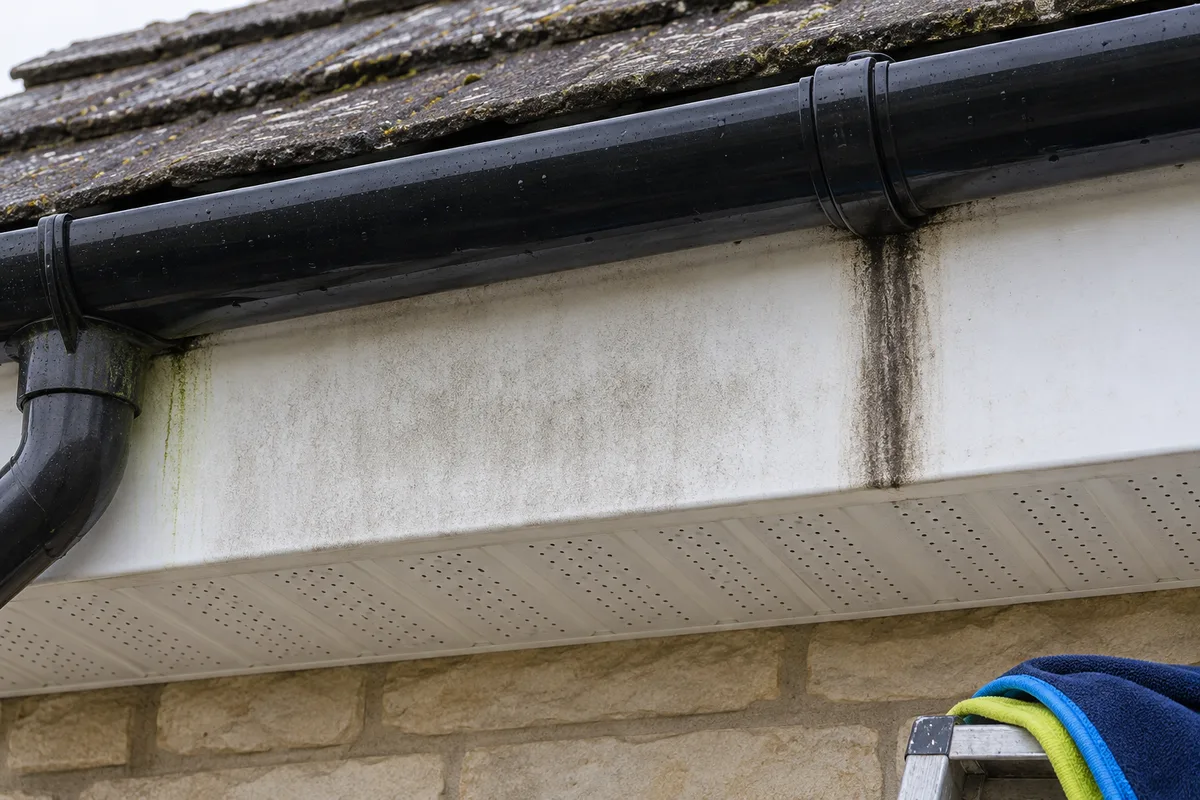 02 · COMPARE BROAD GRIME WITH A LOCALISED STREAKUniform marks often point to general soiling. A sharply localised trail directly below a fitting deserves a closer check for a joint or flow problem.AI-generated illustration · not customer work
Check the gutter before cleaning the fascia
Start from safe ground-level viewpoints. Look along the full gutter run, not only at the stained section. Check for debris above the outlet, standing water, sagging brackets, displaced seals, visible gaps and staining that continues behind the gutter.
If it rains safely while you are at the property, observe the area from the ground. Note whether water drips from a joint, spills over the front or rear edge, or runs down from the roof above. A photograph taken during the event can be much more useful than guessing after everything has dried.
Also follow the downpipe to its final connection. A restricted pipe or gully can cause water to back up at the outlet. See our guides to leaking uPVC gutter joints and blocked downpipes and gullies.
Fascia and soffit materials need different care
Many modern rooflines are white uPVC, but older properties may have painted timber, fibre-cement products, metal trims or previously repaired sections. Do not assume one cleaning product or pressure setting suits them all.
On uPVC, manufacturer guidance generally favours warm water with mild detergent or a specialist non-abrasive PVC cleaner, applied with a soft cloth, sponge or brush and then rinsed. Avoid abrasive pads and solvent-based cleaners, which can dull or damage the finish. Test a small, inconspicuous area first.
Painted timber needs a gentler material-specific assessment. Flaking paint, softness, open joints or decay should be recorded rather than scrubbed aggressively. Where the surface condition is uncertain, pause and identify the material before treatment.
Protect soffit ventilation
Perforated or slotted soffit vents help air enter the roof space. Cleaning should remove surface dirt without forcing water, detergent or debris through the openings. Do not seal the vents with paint or filler, and avoid directing a pressure washer into them.
Our guide to soffit vents and roofline cleaning explains what to keep clear and why a tidy finish should never come at the expense of ventilation.
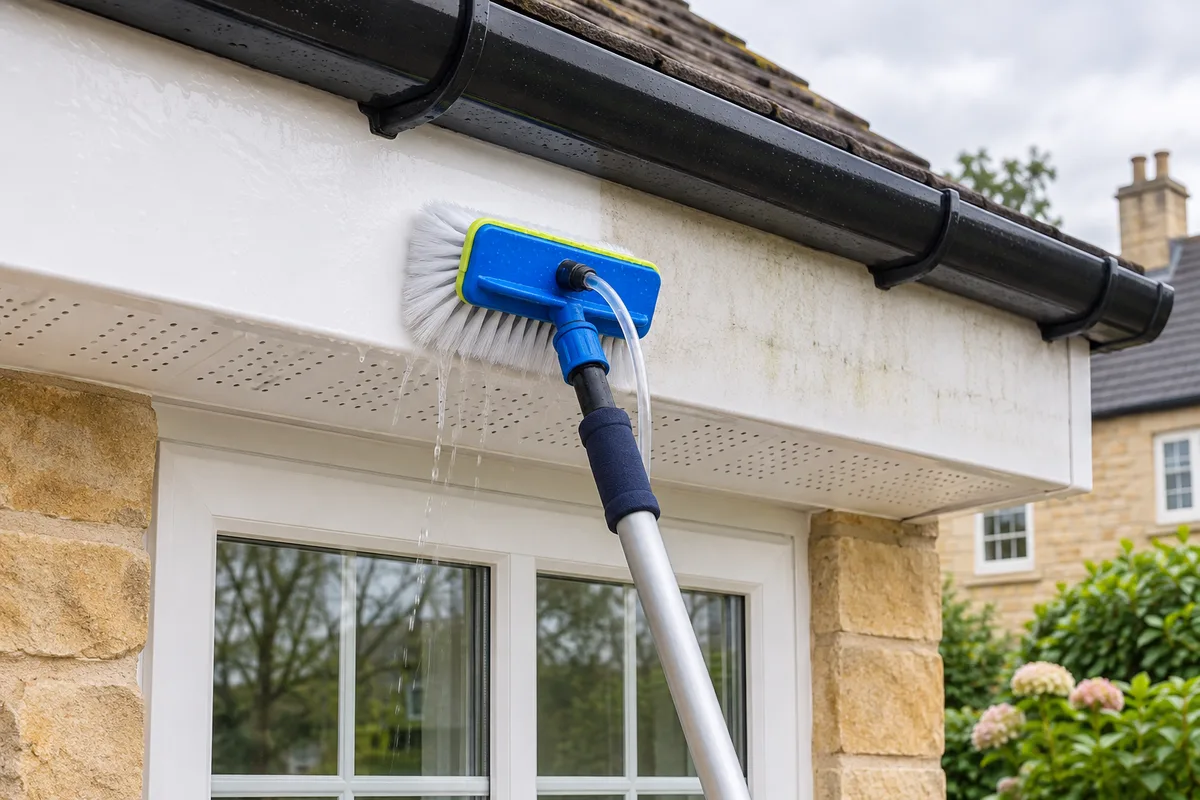 03 · CLEAN GENTLY AFTER THE CAUSE IS ADDRESSEDUse a soft, non-abrasive method suited to the surface. Keep water away from soffit vents and joints, and rinse away loosened dirt rather than spreading it.AI-generated illustration · not customer work
A sensible cleaning sequence for uPVC
- Photograph the staining and note exactly where it begins.
- Check the gutter, outlet and downpipe route for the cause of repeated wetting.
- Clear or repair the rainwater system where needed.
- Test mild detergent or a suitable non-abrasive PVC cleaner on a small area.
- Work with a soft cloth, sponge or brush, using controlled water rather than aggressive pressure.
- Rinse with clean water and keep soffit openings free.
- Recheck after the next substantial rainfall to see whether the mark or leak returns.
Freefoam and Swish both advise gentle cleaning of PVC roofline products and warn against abrasive or solvent-based products. A clean result should not rely on harsh chemicals or damage the surface gloss.
Safe access still matters for a cosmetic job
The Health and Safety Executive advises doing as much work as possible from the ground and using suitable access equipment where work at height cannot be avoided. Do not lean a ladder against a plastic gutter, overreach from a window or climb simply to rub at a stain.
Ground-operated systems can be useful where the work can be controlled and inspected properly. Higher, awkward or fragile rooflines may need different access. The method should be chosen for the building, not forced to fit every elevation.
Keep a simple before-and-after record
Take one wider image showing where the marked section sits on the building and a closer view of the stain, joint or outlet. After cleaning or repair, repeat the same angles. That record makes it easier to see whether the cause was addressed and whether staining returns.
For a practical photo checklist, see what useful before-and-after gutter photographs should show.
The practical rule
Do not judge a roofline mark by colour alone. Use its position and pattern to guide the gutter check, fix the reason water is escaping, then clean the confirmed surface gently and keep soffit ventilation open.
Sources and further guidance
- Historic England: maintenance checklist
- Historic England: maintenance tips
- Freefoam: technical FAQs for PVC roofline cleaning
- Swish Building Products: roofline cleaning guidance
- Health and Safety Executive: working at height safely
Share this guide
Know someone wondering whether dark roofline marks are only dirt? Share this guide so the gutter is checked before the fascia or soffit is washed.
Share on FacebookShare on WhatsApp