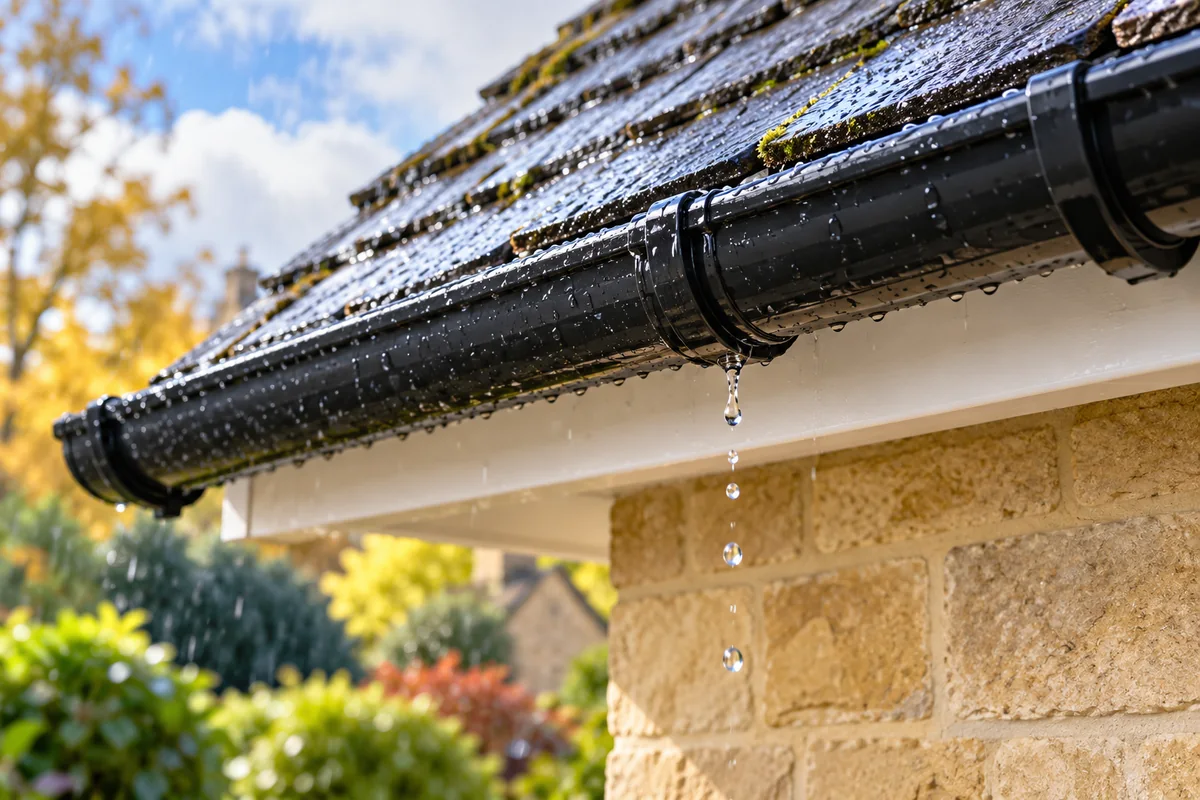
 01 · LOCATE THE DRIPNote whether water spills over the edge or drips beneath a connecting joint.AI-generated illustration · not a customer property
Start with where the water appears
Water spilling over the front of a gutter and water dripping underneath a joint are different clues. Either is worth reporting, but neither tells you the full cause on its own. A blockage, damaged fitting or a gutter that no longer drains correctly may need a different solution.
You can help us plan a visit without climbing up to investigate. A short description and a few photographs taken from a safe place on the ground are a useful starting point.
Water spilling over the edge
Leaves, moss and silt can obstruct a gutter or its outlet. Water may back up and spill over rather than reaching the downpipe. Note whether the overflow is near the outlet, along a longer stretch or concentrated in one corner.
If the gutter still overflows after debris has been removed, further inspection is needed. Sagging sections, the direction of the fall or the capacity of the rainwater system may be involved. Don’t assume another clean will solve every recurring overflow.
For routine maintenance timings, see our guide to why gutter cleaning matters and how often to book.
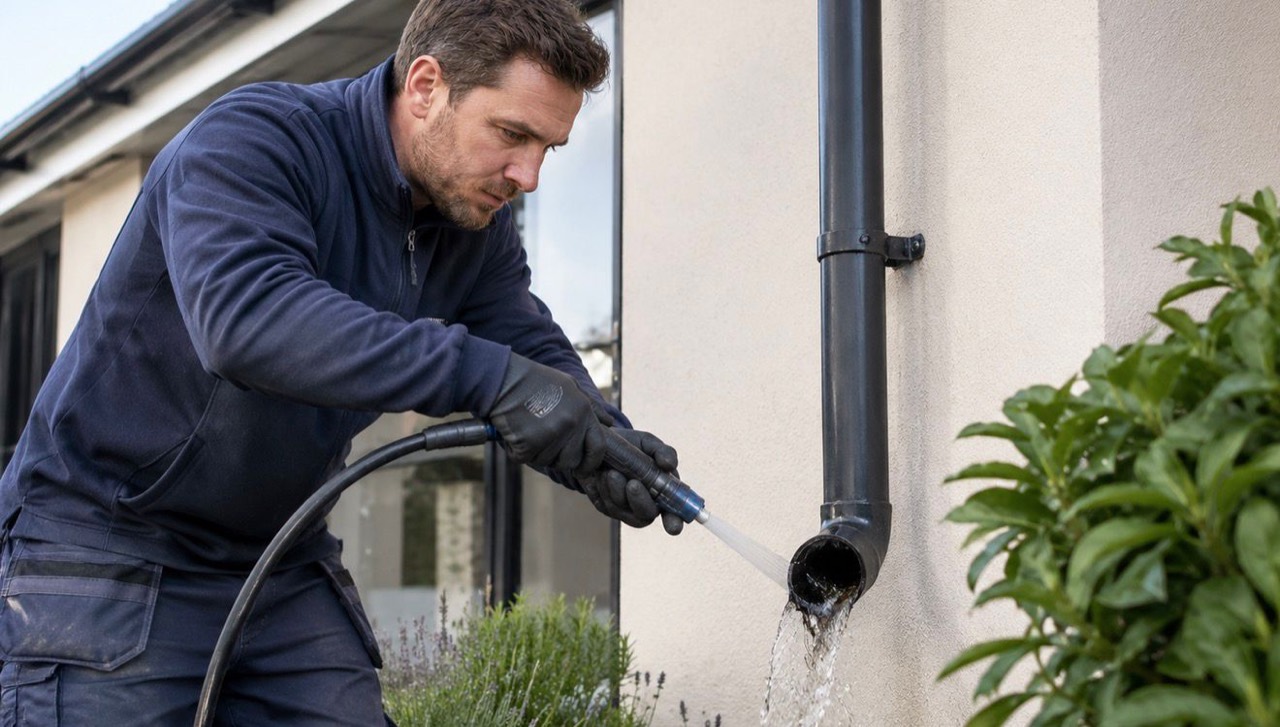 02 · FOLLOW THE ROUTETell us whether water backs up near the outlet or escapes from the downpipe.Illustrative image · not a customer case study
Water escaping around a downpipe
The outlet is where the gutter feeds into the downpipe. An obstruction there can prevent the gutter from emptying properly. A leak at a pipe joint or water collecting at the bottom needs its own check; the visible drip does not establish exactly where an obstruction sits.
It helps to explain whether water comes from a joint partway down, the connection at the top or the drain area at ground level. If the problem appears to extend underground, a standard gutter clear is not an underground drainage survey.
A drip from a gutter joint
A repeated drip underneath a connecting piece can indicate a joint that needs attention. The fitting should be checked along with the way water is draining through the gutter. Clearing leaves and repairing a defective joint are separate tasks, even if both are needed on the same visit.
Tell us if a previous repair has been attempted and whether you know the gutter material. Older metal systems and modern plastic fittings can require different repair approaches.
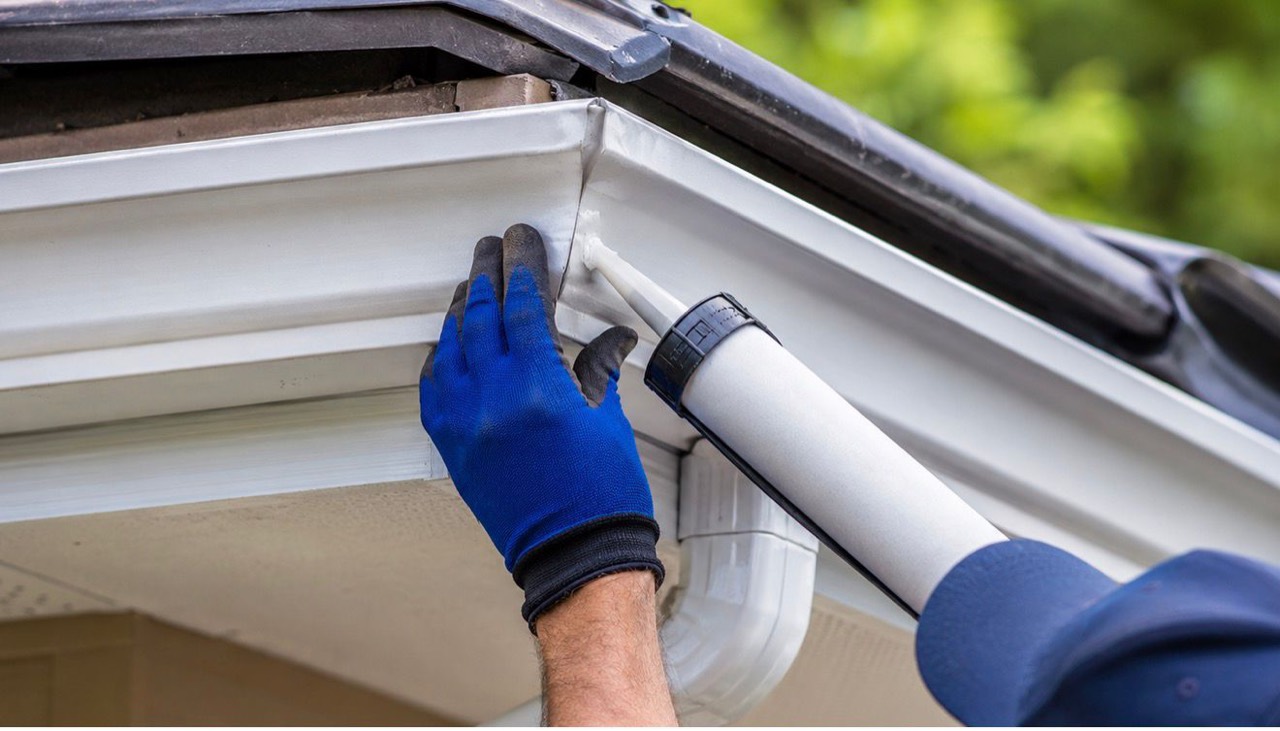 03 · CHECK THE JOINTA leaking connection needs assessment; clearing debris alone may not fix it.Illustrative image · not a customer case study
What to record before requesting a quote
- Location: front, back or side of the property, and the nearest window or corner.
- Behaviour: water over the edge, a drip underneath, or a leak from a downpipe connection.
- Timing: during rain, afterwards, or only when the rain is particularly heavy.
- Access: number of storeys, side passages, locked gates, conservatories and parking restrictions.
- Pictures: a wider view showing access, followed by a zoomed view from the same safe ground-level position.
Stay on the ground. You don’t need a ladder to get the information we need. Keep away from loose or hanging guttering and arrange professional help.
What Bill’s Gutters can check
Our standard gutter clear removes debris from accessible runs, clears the tops of outlets, checks visible joints and records the work in photographs. If a downpipe needs dismantling or a joint needs repair, we explain and agree the extra work first.
We serve Bath, Bristol and our other listed service areas. Tell us what you have noticed so we can quote for the right work.
Further reading: SPAB: rainwater fittings, SPAB: maintenance checks and Cadw: rainwater disposal.
Share this guide
Know someone with overflowing gutters? Send them this article.
Share on FacebookShare on WhatsApp