
 01 · COUNT EVERY SEPARATE ROOFA detached garage or store normally has its own gutter run, outlet, downpipe and discharge point. Treat it as a complete rainwater route, not an afterthought.AI-generated illustration · not a customer property or job
Garages and outbuildings often sit lower than the main roof and may be easy to inspect from the garden. That does not mean their drainage is simple. A short gutter can have a small outlet, a tight bend or a discharge point hidden behind stored items, so one local blockage can affect the whole roof edge.
A useful maintenance visit should identify every roof section on the site before work starts. For homes, rental properties and business premises, that may include a detached garage, attached garage, workshop, bike store, garden office, bin store, lean-to or covered walkway.
Why separate buildings are easily missed
The main elevation is usually the first place people look for overflow. Outbuilding gutters are more likely to be behind a gate, over a side passage, screened by trees or partly hidden by a water butt. They may also have been added or altered at a different time from the main house.
A clear house gutter therefore says nothing about the garage route. Each roof needs its own check from the roof edge to the point where the water is released.
Start with a simple site map
Walk the property from ground level and count each separate roof. For every one, note:
- the complete gutter run: include rear and side elevations that cannot be seen from the drive;
- the outlet position: short runs can still have an outlet hidden behind a corner or fascia return;
- the downpipe route: follow every bend, socket and wall clip;
- the final discharge: record whether it reaches a gully, drain, water butt, lower roof or another drained surface;
- nearby trees and roof debris: a sheltered garage can receive leaves and moss even when it is not directly beneath a tree; and
- safe access: parked vehicles, stored materials, fragile roof sheets, narrow gaps and overhead cables can change the method of work.
Short gutters can block quickly
Capacity is not determined by gutter length alone. The roof area, local rainfall, gutter profile, fall and outlet all affect the route. A small garage roof can direct all its water to one compact outlet, so a handful of leaves or a plug of roof moss at that point may be enough to cause overflow.
Look for a tide mark inside the gutter, staining beneath the outlet, drips at a stop end, green growth on the fascia or a washed line on the ground. These signs help locate the symptom, but the gutter still needs opening and the downstream route needs checking.
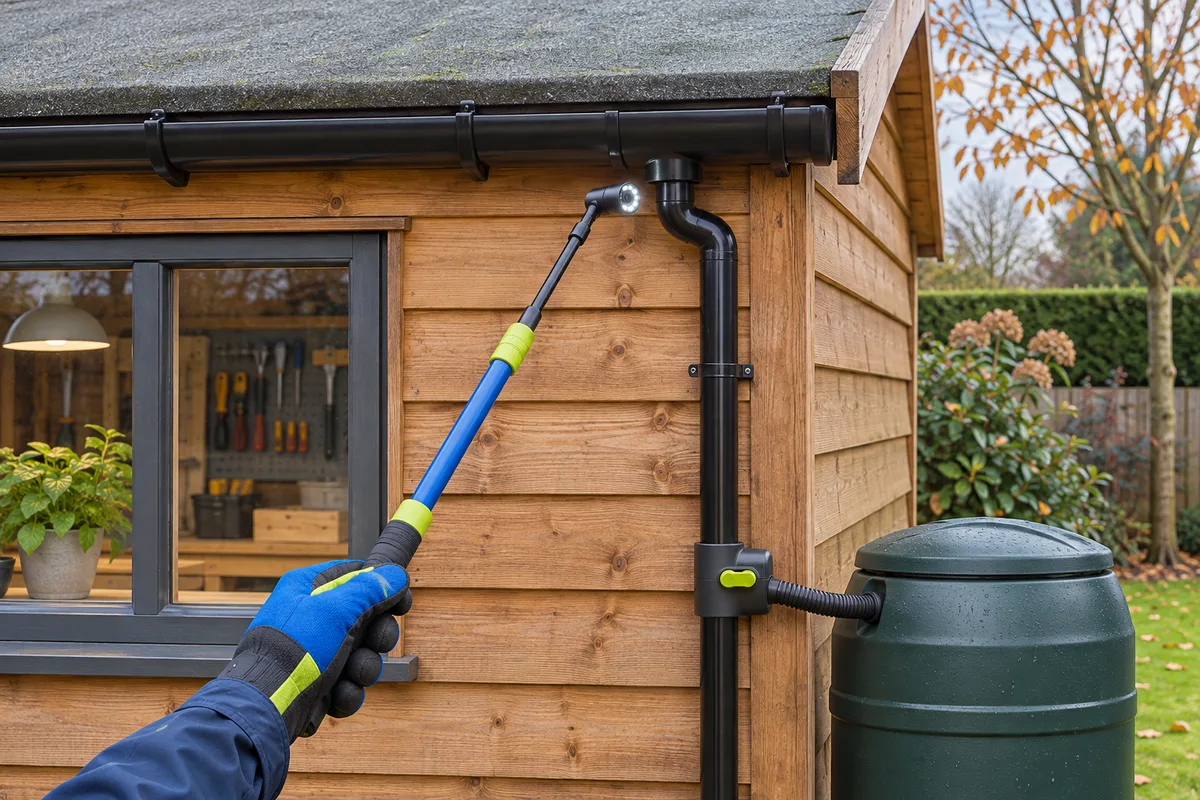 02 · CHECK THE OUTLET, DIVERTER AND PIPEA water butt does not replace the drainage route. The gutter outlet, diverter, overflow and continuing downpipe all need to remain clear.AI-generated illustration · not customer work
If there is a water butt, trace both paths
A diverter normally sends some water into the butt while allowing the rest to continue down the pipe. Check the gutter outlet first, then the diverter body, connecting hose, water-butt inlet and overflow arrangement. A kinked hose or full butt can make the problem appear to be in the gutter when the restriction is lower down.
Do not leave a garage downpipe ending beside the wall simply because the water butt is temporarily disconnected. The continuing rainwater route should still carry water to a suitable discharge point.
Follow the downpipe to its actual end
Approved Document H for England says rainwater pipes should discharge to a drain or gully, although they may discharge to another gutter or to another surface where that surface is drained. It also says a pipe shoe should direct water away from the building when a rainwater pipe finishes over a lower roof or paved area.
For an existing property, the practical question is straightforward: where does the water go after it leaves the pipe? A downpipe that disappears behind a water butt, planter or storage rack still needs a visible, serviceable route. If it ends over paving, check that the water is directed away from the wall and does not pond at the threshold.
Garages have their own vulnerable details
- Door openings: overflow above a wide garage door can wet the lintel, frame and items stored just inside.
- Low eaves: impact from ladders, bins, bicycles or garden equipment can knock a bracket or downpipe clip loose.
- Lean-to junctions: a short gutter may receive concentrated water from a higher roof or valley.
- Flat-roof edges: outlets and scuppers may be hidden from normal view and need a different inspection from an eaves gutter.
- Timber fascias: repeated overflow can leave staining or soft areas that need separate repair after the water route is restored.
- Fragile sheets: older roof coverings and rooflights must never be treated as a safe working surface.
A complete outbuilding clean
- Confirm every elevation and outlet included in the work.
- Photograph the gutter run and discharge point from a safe position.
- Remove loose debris without pushing it into the outlet.
- Clear the outlet throat and check the top of the downpipe.
- Follow the pipe through bends, diverters and sockets.
- Check brackets, joints, stop ends, clips and visible fascia condition.
- Confirm the water reaches the intended gully, drain, butt or drained surface.
- Record any defect that cleaning cannot solve, such as poor fall, damaged fittings or an unsuitable discharge.
A water test can be useful where appropriate, but it is not a substitute for checking the whole route. A small amount of hose water may pass through a restriction that still struggles during sustained rain.
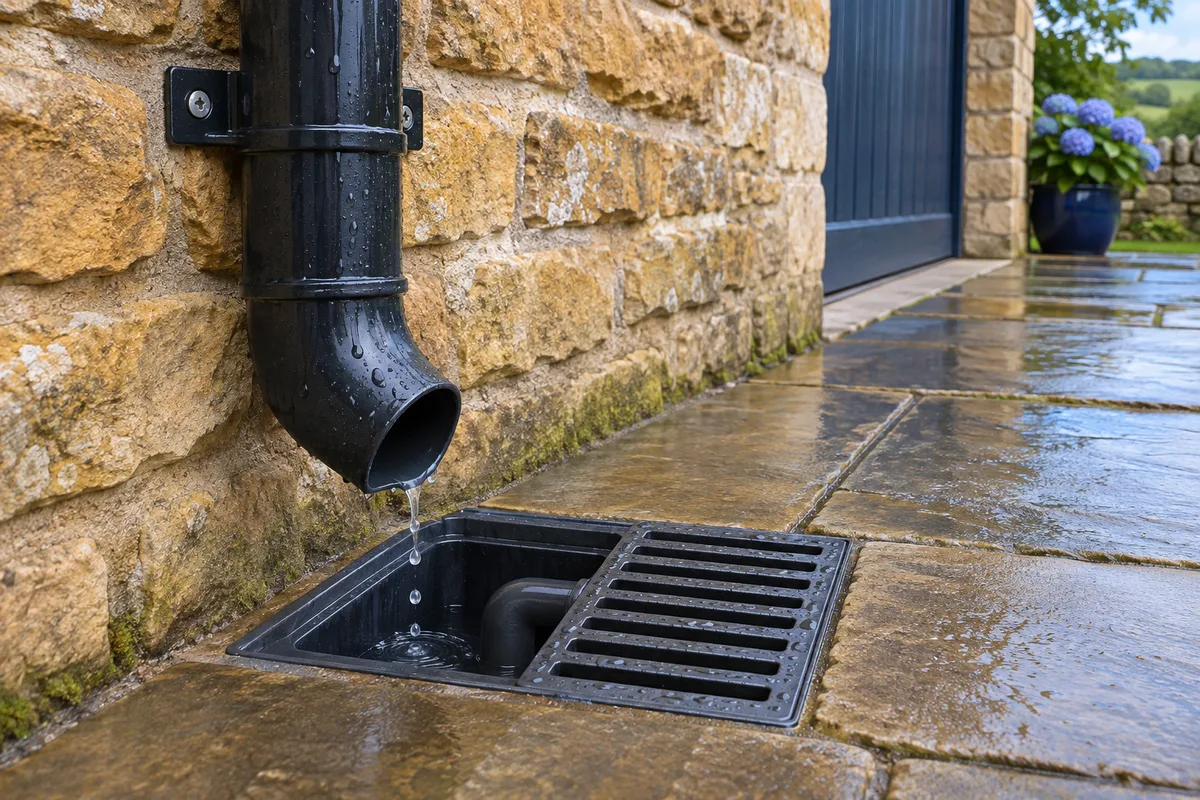 03 · FINISH AT THE DISCHARGE POINTThe inspection is not complete at the bottom of the pipe. Check that the shoe, gully or drain connection receives water without sending it back towards the wall.AI-generated illustration · not customer work
Plan the access before moving anything
Move vehicles, unlock gates and identify stored items that restrict the working area before the appointment where possible. Do not improvise by standing on bins, workbenches or roofs. The Health and Safety Executive advises doing as much work as possible from the ground and using suitable, stable equipment where work at height cannot be avoided. It also says ladders must not be rested against plastic gutters.
Ground-camera inspection and gutter-vacuum equipment may help on suitable low rooflines, but the method still depends on access, debris type, roof geometry and the condition of the system.
For landlords and business sites
Add outbuildings to the same maintenance record as the main premises. Name each location clearly—such as “rear garage, garden side” or “bin store, car-park elevation”—so before-and-after photographs can be matched and repeat defects can be tracked.
Where several units share a garage block or store, record which roof and downpipe serve which area. Do not claim that an unseen underground connection is clear; note the visible discharge point and arrange drainage investigation if water backs up below it.
How often should these gutters be checked?
There is no single interval for every property. Use the same risk factors as the main house: nearby trees, roof moss, past blockages, exposure, bird activity and the number and size of outlets. A garage beneath deciduous trees may need attention more often than a taller main roof in the open.
A good time to review the whole site is after the main autumn leaf fall and again after winter storms or spring seed drop where local conditions justify it. If overflow is already visible, inspect the route promptly rather than waiting for the next routine visit.
Related guides explain where a downpipe should finish, how to care for water butts and gutter connections, and what a useful before-and-after photo record should show.
The practical rule
Count roofs, not buildings. Every garage, workshop, store and garden office needs its gutter, outlet, downpipe and final discharge point traced as one complete route.
Sources and further guidance
- GOV.UK: Approved Document H — drainage and waste disposal
- Health and Safety Executive: working at height safely
- Health and Safety Executive: safe use of ladders and stepladders
Share this guide
Know someone who always remembers the house gutters but forgets the garage or workshop? Share this checklist.
Share on FacebookShare on WhatsApp