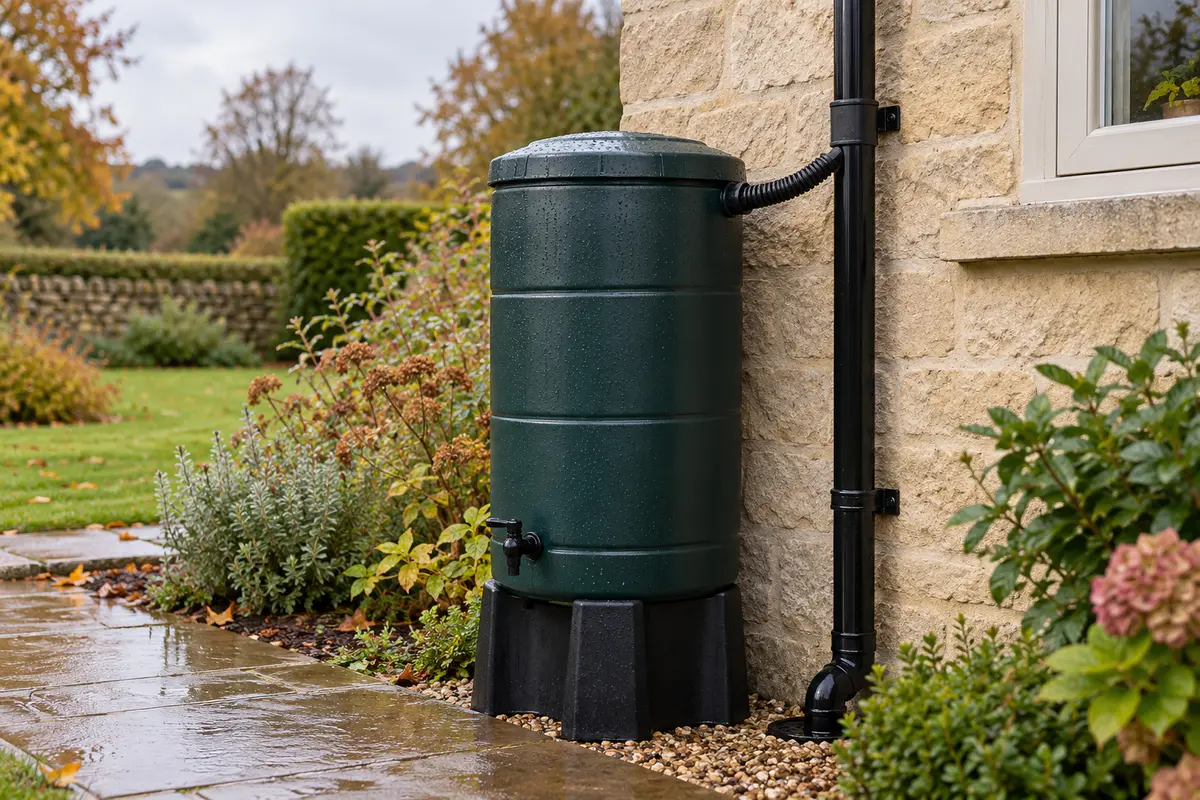
 01 · TREAT THE GUTTER AS THE FIRST FILTERLeaves, moss and silt in the roof gutter can travel towards the diverter. A clear, well-maintained route helps the collection system work as intended.AI-generated illustration · not a customer property or job
Start with the complete rainwater route
A water butt does not begin at the barrel. Its collection route usually includes the roof surface, gutter, outlet, downpipe, diverter, connecting hose and storage container. A restriction at any point can reduce the amount collected or cause water to overflow somewhere else.
Walk the route from firm ground before cleaning or changing anything. Note where the diverter sits, whether it contains a filter, how the hose reaches the butt, and where surplus water goes when the container is full. Different products work differently, so keep the manufacturer’s instructions for the installed model.
Clear the gutter before relying on the diverter
The Royal Horticultural Society advises keeping gutters clear so less organic debris reaches stored rainwater. Loose leaves, moss and roof grit can collect around a gutter outlet, enter the downpipe and eventually reach a diverter filter or the butt.
If the gutter is due for clearing, tell the cleaner that a water butt is connected. The collection hose or diverter may need to be isolated in accordance with its instructions while loosened debris is removed. Do not assume that flushing a dirty gutter into the butt is a useful way to test the system.
Inspect the diverter and filter
Many diverters use a removable insert, screen or internal channel to catch debris and send a proportion of the downpipe flow towards the butt. If that section is clogged, water may continue down the main pipe, collect poorly or escape around a joint.
- look for an accessible cover or filter fitted to the diverter;
- follow the manufacturer’s cleaning and refitting instructions;
- check that the connecting hose is not crushed, split or sharply kinked;
- make sure the hose connections are secure without forcing plastic fittings;
- after refitting, observe the system safely during ordinary rainfall.
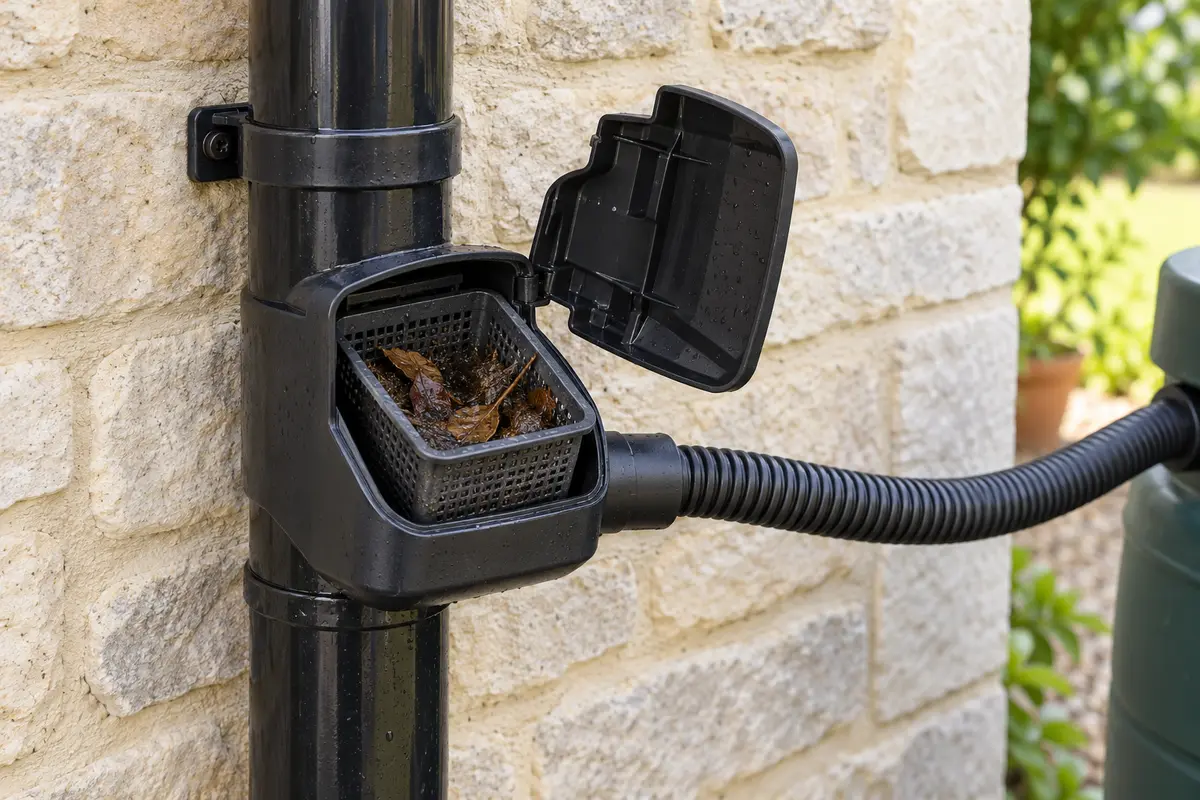 02 · CHECK THE SMALL FILTERA modest amount of leaf litter can restrict a compact diverter. Clean and refit the part only as its manufacturer directs.AI-generated illustration · not a customer property or job
Check the lid, base and tap
The RHS recommends a close-fitting lid and a firm, level stand. The lid helps keep out light, debris and wildlife; the stand keeps a heavy, full container stable and usually raises the tap high enough to fit a watering can underneath.
From ground level, look for leaning, cracking, a sinking base, loose connections and drips around the tap. A full water butt is very heavy, so do not try to move or straighten it while it contains water. Emptying, cleaning or repositioning should be planned safely and in line with the product guidance.
Know where the overflow goes
When the butt is full, incoming rainwater still needs somewhere to go. Some correctly positioned diverters return excess flow to the downpipe; other systems have a separate overflow hose. Whichever arrangement you have, it should be visible enough to inspect and should not discharge against the wall or create a slippery route across a path.
If the overflow returns to the downpipe, the lower downpipe and receiving gully or drain must still be able to pass the flow. If there is a separate hose, check that it is connected, unobstructed and routed as the system designer intended.
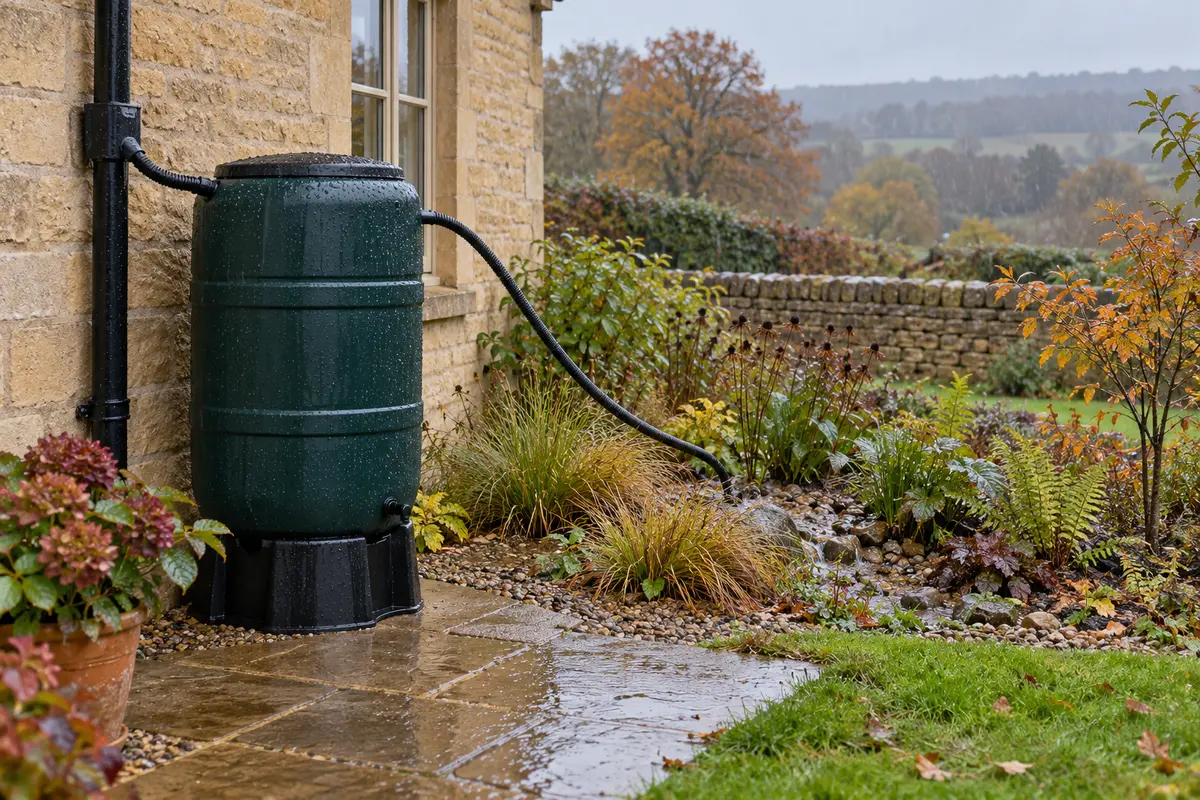 03 · TRACE THE OVERFLOW ROUTEA full butt does not stop the rain. Check where excess water is meant to travel and make sure it is not being sent against the building.AI-generated illustration · not a customer property or job
Keep stored water suitable for its intended use
The RHS describes collected rainwater as a useful supply for garden watering and advises annual cleaning of water butts. If the water develops an unpleasant smell, its advice is to empty and clean the container rather than add garden chemicals.
A domestic garden water butt is not the same as a designed system supplying toilets, washing machines or drinking water. Larger or indoor-use rainwater harvesting systems require appropriate design, separation, identification and maintenance. Ask a suitable specialist if the collected water is intended for anything beyond ordinary garden use.
A practical seasonal checklist
- clear the gutter and outlet before peak leaf fall creates a heavy load;
- inspect the diverter filter at intervals recommended by its manufacturer;
- keep the lid closed and the stand firm and level;
- look for hose kinks, loose joints and drips around the tap;
- confirm the overflow route before a spell of heavy rain;
- clean the container annually and whenever water quality gives cause for concern;
- record any wall staining, pooling or repeated overflow with dated photographs.
Safety first: the Health and Safety Executive advises doing as much work as possible from the ground. Do not climb onto wet roofs or lean a ladder against plastic guttering or a water butt.
What to include with a quote request
- postcode, property type and number of storeys;
- a wide photograph showing the gutter outlet, complete downpipe and butt;
- a close photograph of the diverter and connecting hose;
- a photograph of the stand, tap and overflow arrangement;
- whether the gutter or butt overflows during rain, and where;
- whether there are extensions, conservatories or difficult side access;
- the water-butt or diverter make and model if known.
For related advice, see our downpipe and gully guide, autumn maintenance checklist and service areas across Bath, Bristol and surrounding towns.
Guidance checked on 17 October 2026: Royal Horticultural Society—collecting, storing and using rainwater; Drinking Water Inspectorate—catchment risk assessment for rainwater systems; HSE work-at-height guidance.
Share this guide
Know someone using a water butt? Share this practical guide to gutters, diverters, filters and overflow routes.
Share on FacebookShare on WhatsApp