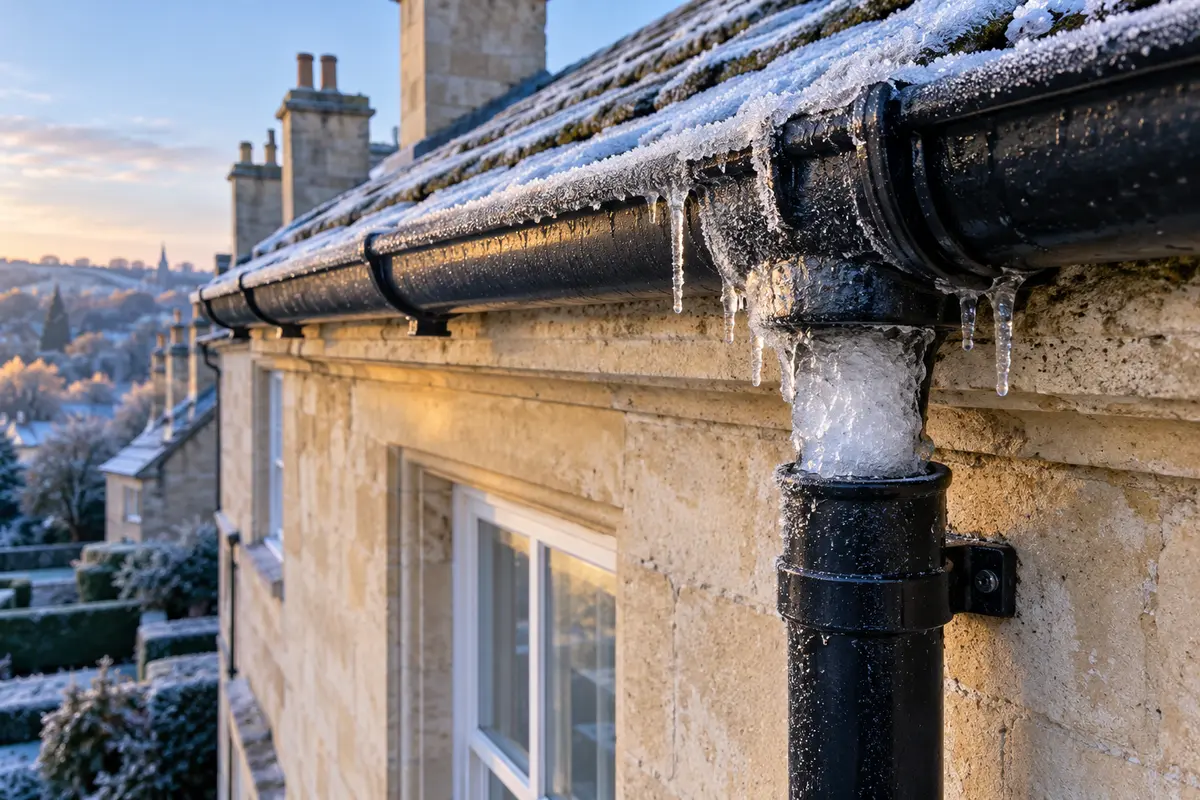
 01 · ICE CAN REVEAL A RESTRICTED OUTLETA frozen plug at the gutter outlet can stop thawing water entering the downpipe and may point to debris already restricting the route.AI-generated illustration · not a customer property or job
Frost does not create every gutter problem, but it can expose a route that was already slow. Water held behind leaves, silt or a partly blocked downpipe is more likely to remain in place long enough to freeze, leaving icicles, a solid outlet or a gutter that overflows as the roof begins to thaw.
The safest response is usually to observe, protect the area below and arrange a proper check when conditions allow. A frozen roofline is not the time to climb, strike the gutter or force hot water through an unknown blockage.
Why gutters and downpipes freeze
During a cold spell, rainwater, melted frost or snow can refreeze where it stops moving. The restriction may be at the top of the downpipe, inside a swan-neck bend, around a joint, in a hopper head or at the ground gully. Shaded elevations can remain frozen after sunny parts of the roof have started to thaw.
A clean, freely draining system can still develop temporary ice in sufficiently cold weather. Ice alone therefore does not prove that maintenance has been neglected. What matters is where it forms, whether the same section repeatedly holds water, and how the system behaves after a safe thaw.
Ground-level warning signs
Without standing beneath hanging ice, look for:
- icicles concentrated below one outlet, joint or hopper rather than evenly along the eaves;
- a solid plug visible at the top of an external downpipe;
- ice or staining down the wall behind the pipe;
- a gutter that looks unusually full or bowed;
- water spilling over one section while nearby runs drain;
- an icy patch beneath the downpipe shoe or around the ground gully;
- internal damp that appears during or after a freeze-thaw period.
Keep people, pets and vehicles away from the area beneath heavy icicles or a visibly distorted gutter. Falling ice and unexpected water release can create hazards at ground level.
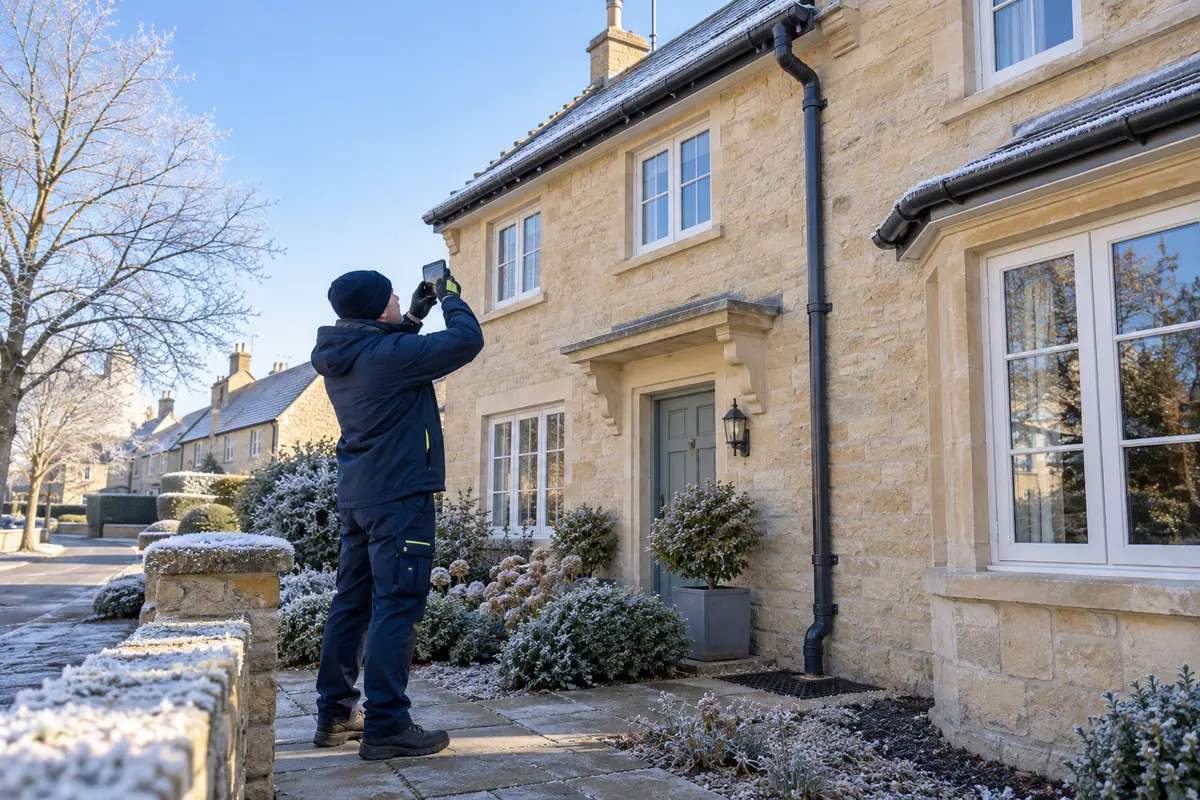 02 · START WITH A SAFE GROUND-LEVEL CHECKPhotograph the complete route from eaves to gully, noting where ice, overflow or staining is concentrated and whether the access area is slippery.AI-generated illustration · not a customer property or job
Do not turn a blockage into a safety problem
HSE guidance says roof work must be planned and that all roofs should be treated as fragile until a competent person has confirmed otherwise. Frost, snow, wet leaves and poor winter light add further slip and access risks. Do not climb onto a roof, conservatory or extension simply because the frozen section looks close.
Avoid improvised thawing methods:
- Do not strike the gutter or downpipe. Cold plastic may be less forgiving, and cast iron, joints, brackets and seals can already be under stress.
- Do not use an open flame or heat gun. These introduce fire, material and access hazards.
- Do not pour boiling water from a window or ladder. It is difficult to control and may refreeze on paths below.
- Do not push rods into concealed bends blindly. A fitting can be displaced or a compacted plug moved further into the system.
- Do not stand directly beneath icicles or a loaded gutter. Ice or retained water may release without warning.
The Met Office’s winter advice warns that added water can refreeze as black ice on pedestrian surfaces. Where a frozen rainwater system is causing an immediate hazard, isolate the area and use a competent contractor with a suitable access plan.
What to check after the thaw
Once the ice has melted and access conditions are safe, trace the rainwater route in order:
- Gutter run: remove loose leaves, moss and silt; check whether the gutter still has a low point.
- Outlet: clear the top of the downpipe and confirm the opening is not restricted.
- Bends and hoppers: look for retained debris, splits, staining or displaced joints.
- Downpipe: check clips, sockets and any sections that may have moved.
- Ground discharge: clear the visible gully grate and note whether water drains away.
- Wall and fascia: record fresh staining, peeling finishes, damp timber or loose fixings.
Historic England’s maintenance guidance recommends checking rainwater goods for blocked or damaged sections, looking for staining below gutters and behind downpipes, and clearing leaves from gutters. These same observations are useful on modern properties.
Use a modest flow check—not a flood test
After visible debris has been removed, a controlled amount of water can help confirm the open route. Observe the outlet, downpipe joints and gully together. Stop if water backs up, escapes from a joint or fails to appear at the expected discharge point.
A short successful check does not certify concealed pipework or underground drainage. If the gully fills quickly or the downpipe remains slow, the restriction may need separate drainage work rather than more water from above.
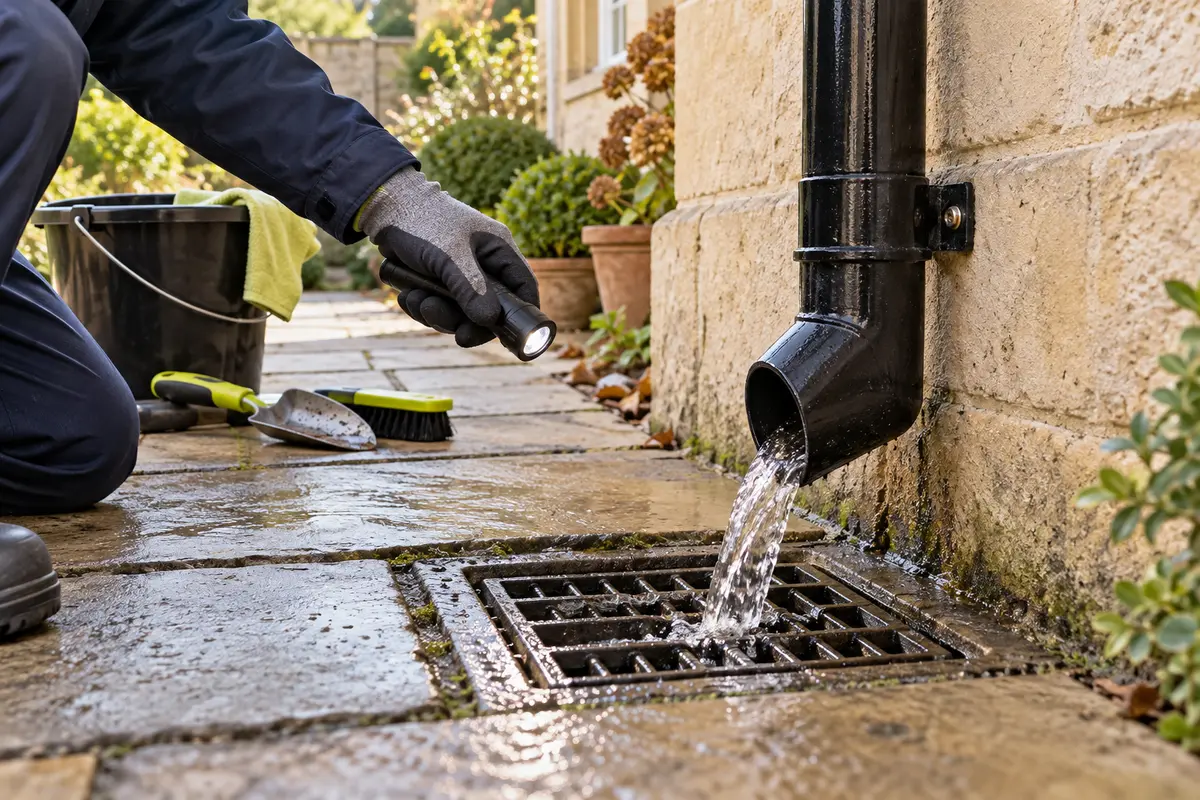 03 · CHECK THE ROUTE AFTER THAWINGA modest flow check can confirm that water reaches the gully, while observation at each joint helps identify leaks or a downstream restriction.AI-generated illustration · not a customer property or job
When clearing is enough—and when it is not
If leaves or silt were holding water at the outlet, a thorough clear may restore normal flow. The gutter should then be checked for alignment and the top of the downpipe, bends, hopper and gully reviewed as one system.
Cleaning will not repair:
- a split gutter or cracked fitting;
- a failed rubber seal at a joint;
- a loose bracket or decayed fascia board;
- a disconnected or fractured downpipe;
- a damaged flat-roof outlet or waterproofing detail;
- a blocked underground drain;
- poor falls that leave water standing after the system is clear.
If a section repeatedly freezes while neighbouring runs remain clear, record that pattern. It can help distinguish a recurring restriction or low point from a one-off severe frost.
Winter planning for homes, landlords and businesses
The best time to reduce cold-weather problems is before a freeze. Clear heavy leaf fall, make sure the tops of downpipes are open and record known low points or leaking joints. On business premises and managed blocks, include pedestrian routes below roof drainage in the inspection: dripping water can freeze where staff, tenants or customers walk.
After strong wind, heavy leaf fall, roof work or a reported overflow, an additional check may be sensible. Keep dated photographs and note which elevations, outlets, hoppers and gullies were inspected. This creates a useful maintenance record without claiming that routine cleaning guarantees against every weather event.
What to send for an accurate quote
From a safe position, send:
- a wide image showing the property height and full elevation;
- close photographs of the frozen or overflowing section;
- the top and bottom of the affected downpipe where visible;
- the ground gully or discharge point;
- front, rear and side access, including conservatories or extensions;
- any staining, sagging, split joint or internal damp mark;
- a note explaining whether the issue appeared during frost, thaw or rain.
For related advice, see our guides to blockages in swan-neck downpipes, working out whether the downpipe or gully is blocked and when a sagging gutter needs more than cleaning.
Guidance checked on 27 October 2026: HSE—roof work; HSE—icy conditions and winter weather; Met Office—severe weather advice; Met Office—clearing snow and ice safely; Historic England—A Stitch in Time maintenance guidance.
Share this guide
Know someone whose gutters or downpipes freeze in cold weather? Share this practical winter check.
Share on FacebookShare on WhatsApp