
 01 · HAND OVER THE WHOLE RAINWATER ROUTEWalk every elevation, identify each outlet and follow every downpipe to its discharge point before the building is left unattended.AI-generated illustration · not a customer property or job
An empty building cannot report a dripping joint, a blocked gully or water cascading over a rear gutter. A short rainwater handover before winter helps the person responsible for the property know what is clear, what needs repair and where to look after the next spell of severe weather.
The useful unit is not just “the gutters”. It is the complete route: roof slopes and valleys, gutters or channels, outlets, hoppers, downpipes, gullies and any visible drain connection. Historic England’s maintenance guidance recommends a logical checklist and regular inspection of this whole chain, including after heavy leaf fall and extreme weather.
Start with a simple plan of the building
Walk around the property from the ground and sketch each roof edge. Mark every visible gutter run, outlet, hopper and downpipe. Continue the line to an open gully, water butt, drain connection or other discharge point. Include rear extensions, porches, bay windows, garages, flat roofs and small dormers; short separate runs are easy to miss when the front elevation looks clear.
For a terrace or divided building, do not assume a continuous-looking gutter has one obvious owner or one downpipe. Record which sections appear to feed which outlet and flag any shared or uncertain route for the property manager. For a shop, office or managed block, add hidden box or parapet gutters and internal downpipes to the plan even if they need specialist access to inspect.
A plan is useful because a later checker can repeat the same route in the same order. It also prevents a photograph of one clean front gutter from being treated as proof that the complete system is ready.
Clear the points most likely to restrict first
Late autumn leaf fall can refill a system that was cleared earlier in the year. The pre-winter check should include the gutter channels, outlet mouths, hopper heads and the tops of downpipes, plus accessible gullies at ground level. Wet silt around an outlet can be less obvious than loose leaves but still reduces the opening available for water.
Look for:
- debris gathered at an outlet or behind a gutter guard;
- plants, moss or compacted silt in the channel;
- standing water that may indicate a local sag or poor route to the outlet;
- loose brackets, separated joints or displaced stop ends;
- cracks, corrosion or staining behind a downpipe;
- a grille hidden under leaves at ground level; and
- vegetation covering the discharge point or making access difficult.
Cleaning is not the same as repair. A clear channel can still leak at a joint, spill behind the gutter or drain into a restricted gully. Record these separately so the handover does not imply that clearing has corrected every defect.
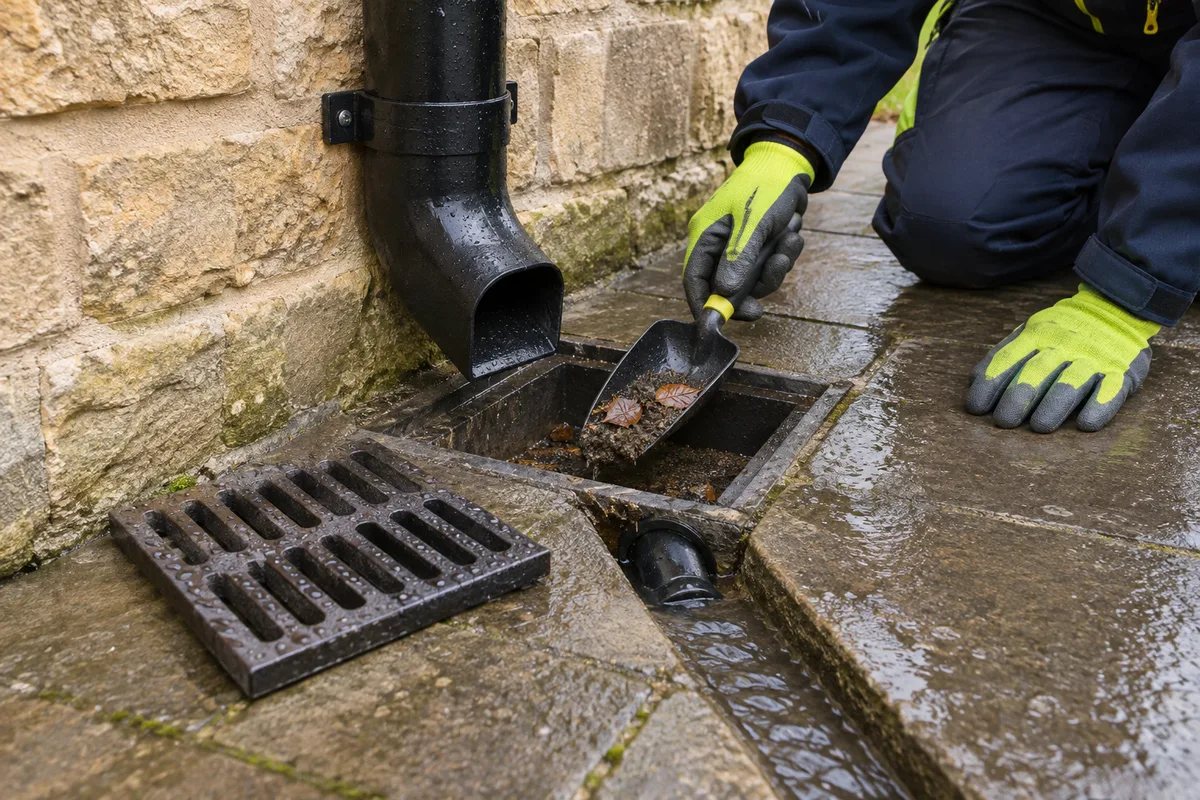 02 · DO NOT STOP AT THE DOWNPIPEAn open shoe and gully make the discharge visible. Clear the grating and record whether water can continue away from the wall.AI-generated illustration · not customer work
Trace every downpipe to the ground
A clean eaves gutter can still overflow if the restriction is lower down. Check that each downpipe is securely fixed, its sockets remain together and the shoe or connection is not discharging onto the wall. Historic England notes that an open shoe over a surface gully can make inspection and maintenance easier than a concealed direct connection.
Where a downpipe ends above a gully, the gap should remain visible and the grille should be clear of silt, vegetation and rubbish. If water backs up around the gully, the problem may be below ground rather than in the guttering; that needs to be recorded as a separate drainage issue rather than repeatedly dismantling a clear downpipe.
Where the pipe enters the ground directly, note the connection and any nearby inspection point. Do not claim the buried route is clear simply because the visible pipe looks sound. Persistent backing up, leakage at a low socket or water emerging at ground level needs further investigation.
Use rain as evidence, not as a reason to work unsafely
If there is a suitable spell of ordinary rain before the property is closed, observe the roof edges from a safe position. Note whether water reaches the gutter, where any spill starts and whether every downpipe appears to discharge. A short video can show the timing more clearly than a single photograph.
Distinguish between water:
- rising over the rim near an outlet, which may indicate a restriction;
- dripping from one joint below the channel;
- running behind the gutter at the roof edge;
- overshooting where a valley concentrates flow; and
- backing up from a ground gully.
These patterns lead to different work. Do not climb during rain, reach from an upper window or use an insecure ladder to get a closer view. The Health and Safety Executive says work at height should be avoided where reasonably practicable, equipment must be suitable and stable, and a ladder must not be rested against plastic guttering.
Leave a baseline record
A useful handover record is brief but specific. Photograph every elevation widely enough to identify the location, then add close views of defects, outlets and discharge points. Pair each image with the date and a plain description such as “rear right downpipe to open gully” or “front first-floor union dripping in rain”.
Include:
- the roof and rainwater plan;
- before-and-after photographs of any clearing;
- defects that remain outstanding;
- areas that could not be inspected and why;
- safe access information for rear yards, gates and plant areas;
- the name and number of the person authorised to arrange repairs; and
- the next planned check or the trigger for an additional one.
That trigger may be the end of heavy leaf fall, a reported storm, a freeze-thaw spell or evidence of water inside the building. Historic England advises reviewing the maintenance schedule and checking rainwater systems during and after extreme weather; the right interval depends on the property, nearby trees, exposure and how quickly a defect could go unnoticed.
 03 · LEAVE A USEFUL RECORDWide roofline photographs, close defect views and a simple site plan give the next checker a reliable baseline.AI-generated illustration · not customer work
Plan how the empty property will be checked
Agree who will look after the rainwater system while the building is empty. A neighbour noticing a spill is helpful, but it is not a maintenance plan. The responsible person should know which elevations can be viewed safely, how to report a defect and who can authorise urgent work.
For landlords and managing agents, keep the record with the property file rather than only on one person’s phone. For shops and offices, make sure the contact can access rear service areas and knows about roof zones that are not visible from the street. For an older or listed building, retain details of traditional cast-iron gutters, decorative hoppers or concealed channels and obtain appropriate advice before changing them.
Do not wait for an internal damp patch before recording an external failure. Staining, algae, washed joints, wet masonry behind a pipe or repeated pooling beside the wall are all reasons to investigate the rainwater route promptly.
A practical lock-up sequence
- Map every roof edge and outlet. Include extensions, garages and hidden channels.
- Clear gutters, hoppers and accessible gullies. Keep cleaning and repair findings separate.
- Trace every downpipe. Record where it ends and whether the discharge is visible.
- Observe ordinary rain if possible. Note the exact spill or drip pattern from the ground.
- Repair urgent defects. Loose sections, open joints and water directed onto the wall should not be left as a vague note.
- Photograph the finished route. Use wide location views as well as close details.
- Record limitations. Identify high or concealed areas that still need suitable access.
- Assign the next check. Name the responsible person and the weather or date that triggers it.
Related guides explain how to prepare an autumn gutter checklist, distinguish a blocked downpipe from a blocked gully, plan useful before-and-after photographs, and inspect hidden valley, box and parapet gutters.
The practical rule
Before an empty building is locked up, make the complete rainwater route visible on paper: what was cleared, what still needs repair, where every downpipe discharges and who will check it after severe weather.
Sources and further guidance
- Historic England: maintenance checklist
- Historic England: inspection, maintenance and repair of rainwater systems
- Historic England: resilient rainwater systems
- Health and Safety Executive: working at height safely
Share this guide
Know someone leaving a home, rental or business premises empty this winter? Share this rainwater handover checklist.
Share on FacebookShare on WhatsApp