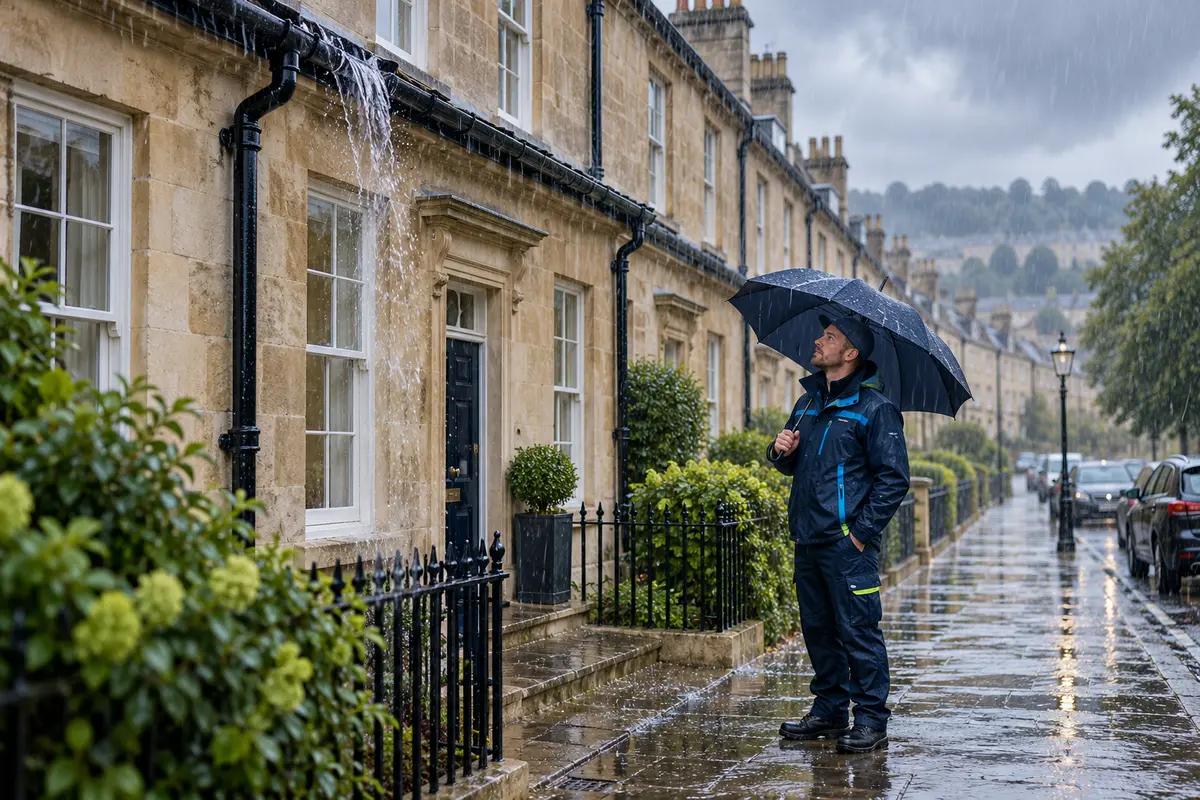
 01 · RAIN CAN SHOW WHERE WATER ESCAPESWatching from a safe ground position can reveal whether water spills over the front, escapes at a joint or backs up beside an outlet.AI-generated illustration · not a customer property or job
A little rain does not create one automatic answer for every gutter-cleaning job. Some ground-level observations may still be useful in light rain, while high-level work may need to pause because of wind, lightning, poor visibility, slippery surfaces, unsuitable ground or the limits of the access equipment.
The decision should be based on the conditions at the property and the planned method of work. A two-storey home with clear ground access is different from a tall terrace beside a busy pavement, a conservatory roof or a building that needs a mobile elevating work platform.
Rain can help identify the symptom
Dry-weather photographs show the layout, but rain can show how the system behaves. From a safe position, note:
- whether water spills over a broad length of gutter or at one point;
- whether the overflow sits above a downpipe outlet;
- whether water drips from a joint or behind the gutter;
- whether a hopper head fills and overflows;
- whether the downpipe discharges freely into the gully;
- whether water appears from a roof valley, parapet or another higher channel.
A short video can be particularly useful because it records the direction and volume of water. Take it only from the ground, a doorway or a closed-window position. Do not lean out, climb a ladder or stand directly under a heavy overflow to get a closer view.
Light rain is not the only weather factor
The rainfall rate is only one part of the assessment. Wet paving may reduce traction for ladders, towers or stabilisers. Water on a roof, ledge or working platform can increase slip risk. Heavy rain may reduce visibility, hide surface defects and make it harder to control tools or collect debris.
Ground-operated equipment avoids some work at height, but conditions still matter. Long poles can be harder to control in gusts, electrical equipment needs to be suitable for the environment, and the operator needs a stable area away from traffic and pedestrians.
HSE guidance says work at height must be properly planned, supervised and carried out by competent people using suitable equipment. Weather and the changing condition of the site form part of that plan; there is no sensible one-size-fits-all rule based only on the word “rain”.
Wind can be the deciding factor
Wind may be more restrictive than rain, especially where long poles, towers, sheeting or a mobile elevating work platform (MEWP) are involved. Gusts around rooflines and between buildings can be stronger or less predictable than conditions at ground level.
HSE advises that high winds can tilt MEWPs and make them unstable, and that a maximum safe wind speed should be set for operation. The machine’s manufacturer limits, configuration and site conditions must be followed. A general weather app cannot replace an on-site assessment.
If equipment cannot be controlled, the exclusion area cannot be maintained or the wind approaches the permitted operating limit, the work should not continue simply to keep an appointment.
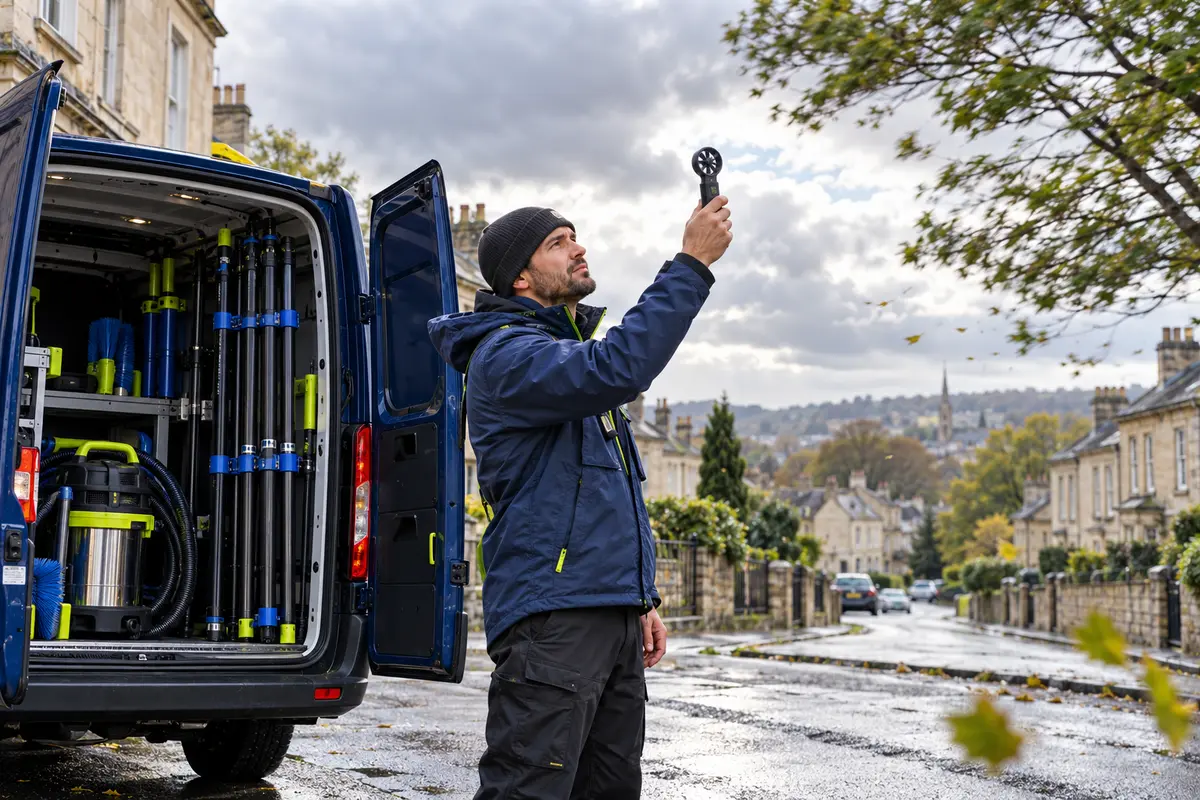 02 · CHECK CONDITIONS AT THE PROPERTYForecasts help with planning, but the actual wind, access route, equipment limits and nearby public areas determine whether the work can start or continue.AI-generated illustration · not a customer property or job
Thunder and lightning mean exposed work should stop
Lightning is not a condition for experimenting with ladders, long poles, scaffold or powered access. The Met Office advises people to seek shelter during thunder and lightning. Outdoor high-level work should pause, equipment should be made safe and the team should move to suitable shelter.
Do not shelter under a tree or remain on an exposed roof, platform or open scaffold. Restarting should depend on the storm having moved away and a fresh assessment of the site, surfaces and equipment—not merely on rain becoming lighter.
Frost, ice and snow create different problems
A cold, bright morning can still be unsuitable if access routes, rungs, platforms, roofs or pavements are icy. Frozen debris can be tightly bonded to a gutter, and ice inside an outlet or downpipe may prevent a meaningful flow check.
Do not strike brittle plastic guttering or pour boiling water into a frozen system. Sudden heat can damage some materials, while uncontrolled meltwater can refreeze below. It is usually better to wait for safe natural thawing, then inspect for displaced joints, cracks or leaks.
After severe weather, access equipment may also need checking before reuse. HSE specifically notes that storms and snow can damage MEWPs and that the platform should be inspected after severe weather.
Weather warnings are a planning tool, not a site method
The Met Office issues warnings for rain, thunderstorms, wind, snow, lightning, ice, extreme heat and fog. Check the warning details for the property’s location, timing and expected impacts—not only the colour shown on a map.
A warning can justify moving non-essential work before travel or setup begins. Equally, the absence of a warning does not prove that a particular roofline, courtyard or exposed hill site is safe. Local gusts, wet surfaces and access constraints still need assessing on arrival and throughout the job.
What to send if weather reveals a gutter problem
Useful, safely gathered information includes:
- a wide photograph showing the whole elevation and height;
- a short video of the overflow from a sheltered ground position;
- the time and whether the rain was light, steady or a short heavy downpour;
- which joint, outlet, hopper or downpipe appears involved;
- whether the ground gully was also overflowing;
- details of rear access, extensions, conservatories and shared paths;
- any visible loose guttering or fallen material—without approaching it.
Do not wait outside during lightning or high winds to collect evidence. A description and dry-weather property photographs are enough to start a conversation, and the inspection can be planned for safer conditions.
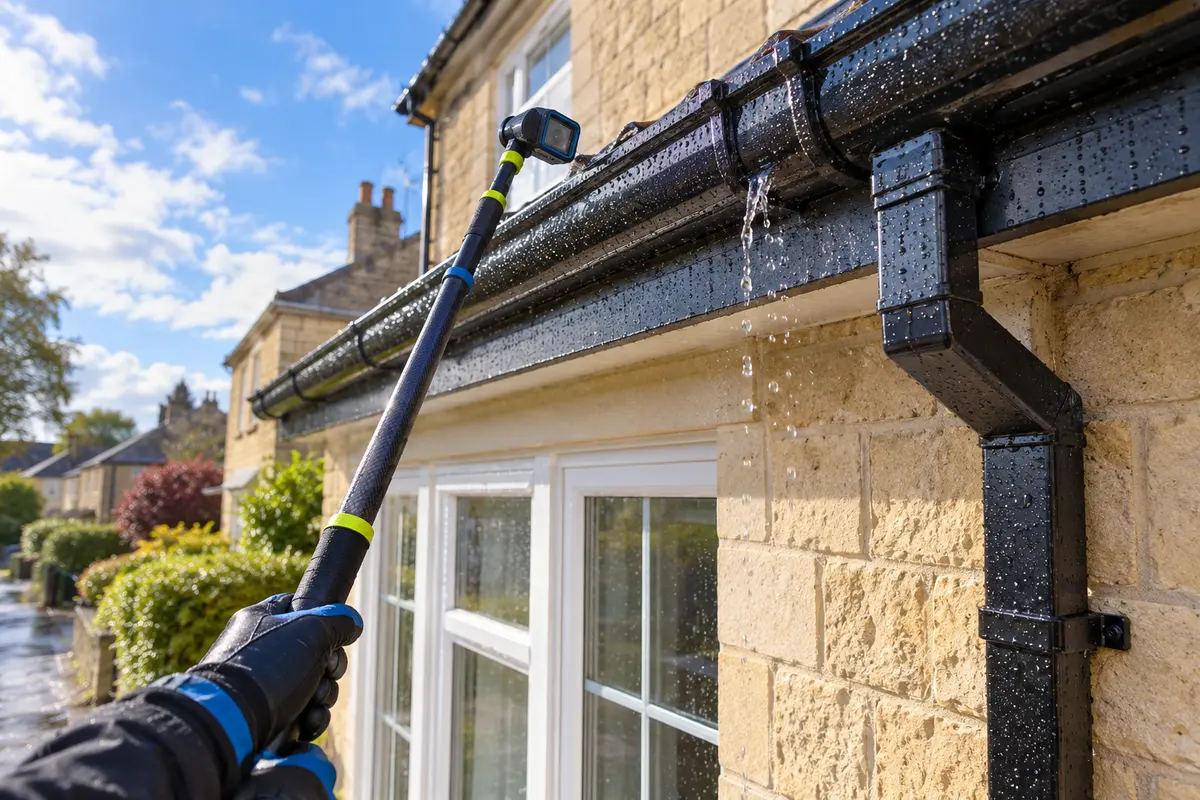 03 · RECHECK WHEN CONDITIONS IMPROVEA ground-operated camera can help confirm the outlet, joint and debris position once the weather and working area are suitable.AI-generated illustration · not a customer property or job
Why a weather delay can change the appointment
A delay is not only about the cleaner getting wet. Weather can affect the chosen access method, safe setup area, pedestrian controls, visibility, equipment limits and whether debris can be removed without creating another hazard.
When a visit is rearranged, keep the original photographs and add any new image showing the water path. If the situation changes—such as guttering becoming loose or water entering the building—say so when rebooking because the work may now need a repair assessment rather than routine clearing alone.
For related advice, see our guides to safe checks after strong wind and heavy rain, distinguishing a blockage from a leaking joint and planning access on tall properties.
Guidance checked on 24 October 2026: HSE—working at height safely; HSE—safe use of ladders and stepladders; HSE—mobile elevating work platforms; HSE—roof work; Met Office—weather warnings guide; Met Office—thunder and lightning safety.
Share this guide
Know someone wondering whether gutter work can go ahead in poor weather? Share this practical guide.
Share on FacebookShare on WhatsApp