
 01 · WAIT FOR SAFE CONDITIONSCheck the roofline only after the strong wind and heavy rain have passed.AI-generated illustration · not a customer property or job
Begin after the weather has passed
Strong wind can move twigs, leaves and loose material onto a roof. Heavy rain may then reveal an overflow, leak or drainage problem. A short check afterwards can help you describe what has changed—but it should be done from a safe position on the ground.
Do not inspect the roofline while the wind is still strong, during lightning, or when falling material is possible. Keep clear of any loose guttering, tiles or cables. The Health and Safety Executive’s work-at-height guidance includes advice on avoiding work at height where possible and using appropriate equipment when it cannot be avoided. For a household check, there is no need to climb a ladder or walk on a roof.
Walk around and look for changes
When conditions are calm, stand well back and compare the front, back and sides of the property. Look along the gutter rather than only at one spot. Useful signs to note include:
- a gutter run that now looks bowed, tilted or lower at one end;
- a joint that appears separated or a bracket that has moved;
- a downpipe, hopper or shoe that is no longer aligned;
- twigs, moss or leaves visibly hanging over the gutter edge;
- fresh splash marks, staining or pooling close to the wall.
A ground-level view will not always show the cause. Record the location—such as “rear left corner above the kitchen”—rather than trying to diagnose it from a distance.
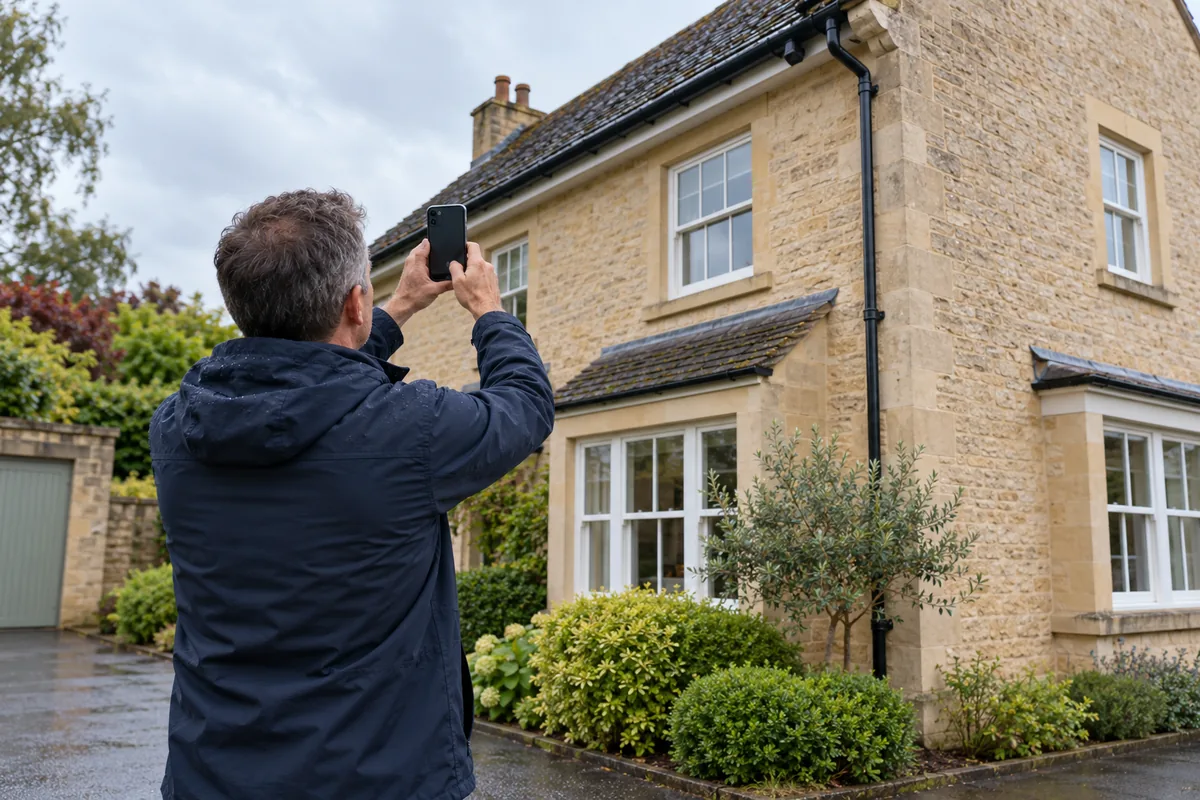 02 · TAKE USEFUL PHOTOSA wider view and a zoomed view from the same safe position help identify the location.AI-generated illustration · not a customer property or job
Take photographs that explain the problem
Start with one wider picture showing the full side of the property. Then take a zoomed photograph of the gutter, joint or downpipe from the same ground-level position. Photograph conservatories, extensions, narrow side paths and gates too, because access can affect how work is planned.
If you safely notice a problem while rain is falling, a short ground-level video may show whether water is spilling over the front edge, dripping beneath a joint or backing up at an outlet. Do not stand beneath a suspect fitting, and do not lean from an upstairs window.
Check the route at ground level
Follow each downpipe with your eyes to the bottom. Check whether the shoe still points towards the intended gully or drain, whether the surface grate is covered by leaves, and whether water is collecting against the wall. Clear only loose surface debris that can be reached safely without moving a damaged fitting.
A gutter-clear service deals with the agreed gutters and accessible outlets. It does not automatically clear an underground drainage system. If a gully repeatedly backs up after visible surface debris has been removed, describe that separately; a drainage specialist may be needed.
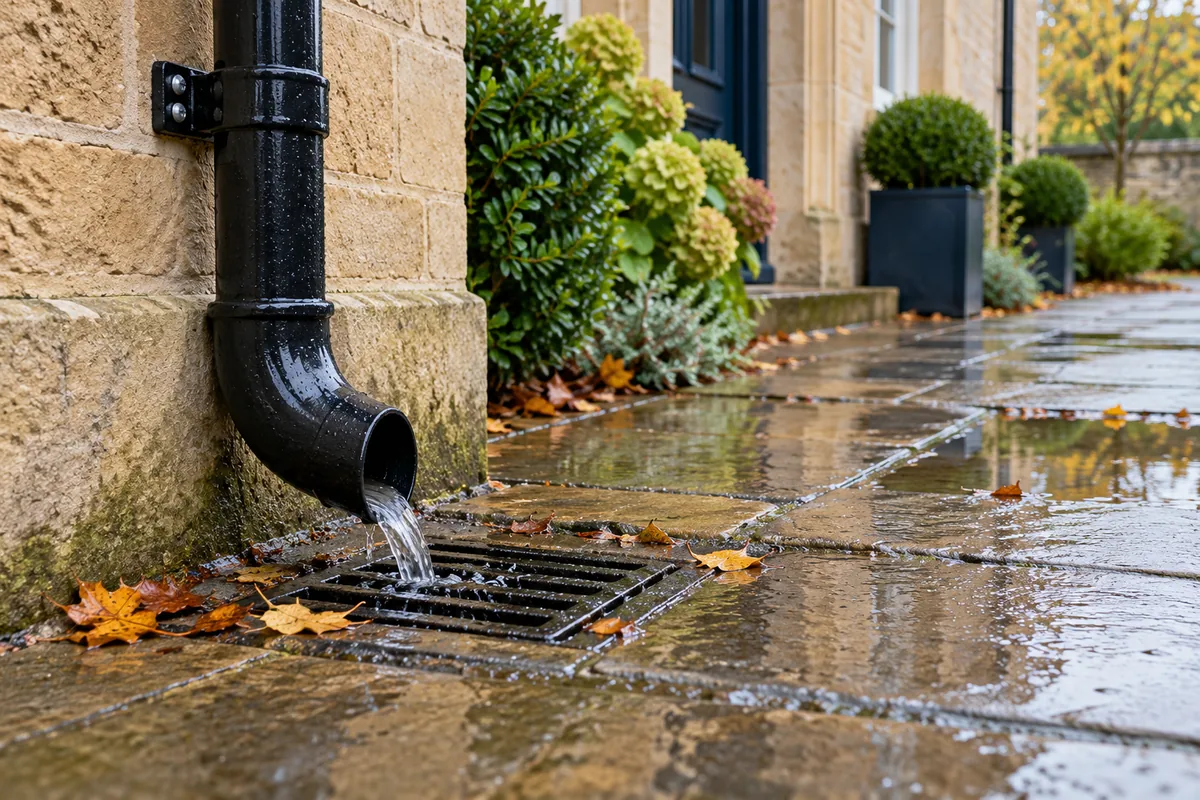 03 · FOLLOW THE WATER ROUTECheck the downpipe base, surface gully and nearby paving without disturbing the fittings.AI-generated illustration · not a customer property or job
Know when to keep clear
Keep people and vehicles away from the area if guttering is hanging loose, a roof component appears displaced or material may fall. Do not touch a fitting near an electrical cable. Arrange prompt help from an appropriate qualified contractor; if there is an immediate danger to people, use the relevant emergency service.
Overflow alone does not prove whether the cause is debris, a restricted outlet, a faulty joint or the capacity of the system. Our overflowing-gutter guide explains the clues you can report without climbing.
What to include when requesting help
- Property: postcode, property type and number of storeys.
- Location: front, rear or side, plus the nearest window, door or corner.
- Symptom: overflow, dripping joint, sagging section, displaced downpipe or debris.
- Timing: whether it happened during heavy rain, continued afterwards or is still present in dry weather.
- Access: locked gates, extensions, conservatories, shared paths and parking restrictions.
- Photos: one wide view and one zoomed view, taken from ground level.
Do not take risks for a photograph. A description and a safe wider image are enough to start. We can review what else is needed before work is arranged.
A five-minute check can create a useful record
For homeowners, landlords and businesses, dating your photos gives you something to compare after the next spell of bad weather. The Society for the Protection of Ancient Buildings advises regular clearing and defect checks, and notes that gutters, downpipes and gullies can become blocked by leaves, moss and other debris.
Bill’s Gutters provides gutter clearing and agreed minor gutter repairs across Bath, Bristol and surrounding service areas. Send the details above and we can confirm the next step for your property.
Safety and maintenance guidance checked on 5 October 2026: HSE work at height; SPAB rainwater fittings; SPAB Maintenance Week.
Share this guide
Share this safe post-storm checklist with someone who looks after a home, rental property or business premises.
Share on FacebookShare on WhatsApp