
 01 · IDENTIFY THE ACTUAL SYSTEMAluminium gutters can be extruded or cast, with different profiles, joints and coatings. Match maintenance and repair work to the manufacturer’s system.AI-generated illustration · not a customer property or job
Aluminium guttering is often chosen for a crisp appearance and long service life. It is not maintenance-free, though. Debris can still cover an outlet, fixings can loosen, sealant can age and a powder-coated surface can be scratched or stained.
The important difference is that aluminium should not automatically be treated like uPVC. Profiles may use bolted and sealed joints, concealed unions or system-specific brackets. Before cleaning or repairing anything, identify the profile and follow its manufacturer’s guidance.
Start with a safe ground-level survey
Walk each accessible elevation after dry weather and again during steady rain. Use binoculars or a zoomed camera rather than leaning from a window. Note the gutter profile, colour, outlets, angles, stop ends, joint positions and every route taken by a downpipe.
Look for:
- debris or standing water around an outlet;
- drips at a joint, stop end, angle or outlet;
- a change in line, ponding or a bracket that appears out of position;
- downpipe clips that are loose, missing or pulling from the wall;
- scratches, chips, chalking, staining or exposed metal in the coating;
- contact with another metal, wet mortar, persistent plant growth or trapped dirt; and
- water backing up from a gully or ground drain below.
Record wide photographs first, then close views. They make it much easier to match a leak to the correct fitting and to identify whether access is restricted by a conservatory, extension, narrow passage or public area.
Clear debris without damaging the finish
Aluminium gutters still need periodic removal of leaves, moss, silt and roof debris. A clean outlet is particularly important because a small plug at the throat can make water back up along an otherwise clear length.
Use methods that protect the decorative finish. Do not scrape a powder-coated surface with steel tools, aggressive abrasives or an improvised wire. Avoid forcing debris into the downpipe: collect it, then check the outlet and the route below. If the system needs washing, use the cleaning method recommended for that coating and rinse away residues.
Marley Alutec advises periodic gutter clearing, checking that fixings remain secure and washing its coated rainwater products with clean water at least annually—more often in marine or aggressive environments. That interval belongs to its own product guidance; another manufacturer or site exposure may require something different.
Why aluminium gutter joints deserve a closer look
Metal gutter lengths move as temperatures change, so the joint is designed to stay watertight while accommodating movement. Alumasc’s technical guidance says its correctly made joints remain watertight under expected thermal movement and its installation information requires movement allowances to be preserved at joints and fixings.
A joint should be investigated when it drips repeatedly, has opened, is distorted, has missing hardware or shows failed sealant. Check the gutter line and nearby supports too: resealing a joint will not solve movement caused by a loose bracket or a length installed under strain.
Do not smear general-purpose sealant over the outside as a first response. Different aluminium systems use different joint components and sealants. A sound repair may require the joint to be separated, old sealant removed, mating faces cleaned and the correct seal remade in the manufacturer’s sequence.
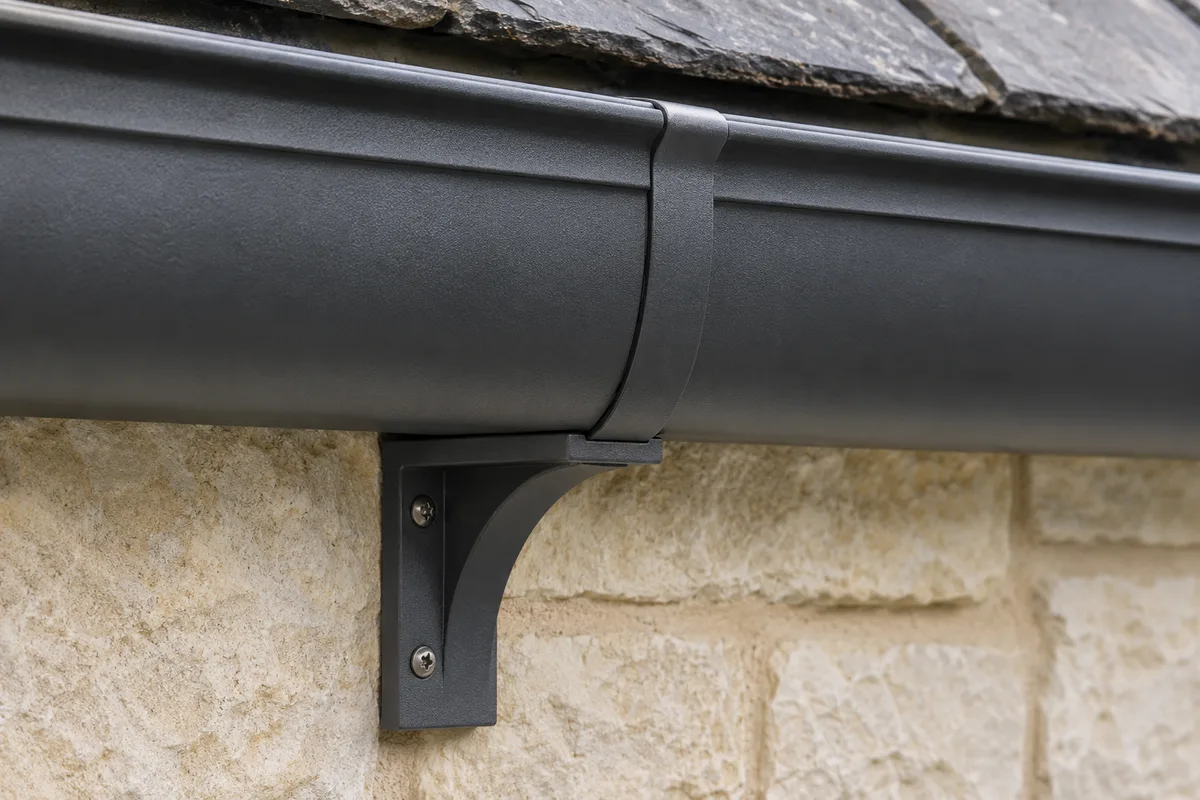 02 · CHECK THE JOINT AND ITS SUPPORTA leak at the union may involve the seal, hardware, alignment or nearby bracket. The correct repair depends on the particular aluminium system.AI-generated illustration · not customer work
Protect powder-coated surfaces
Powder coating provides the colour and a protective decorative finish. It should be washed before heavy grime, traffic film, salt or organic deposits become established. Pay attention to sheltered undersides and the back of downpipes, where rain may not rinse the surface effectively.
Light surface marks and damage through to bare metal are not the same problem. Marley Alutec’s published guidance says a light scuff may be better left alone, while a scratch through to bare metal can be repaired with appropriate touch-up paint applied only to the damaged area. Severe damage may justify replacing the component. Use the original manufacturer’s colour and preparation instructions rather than a household paint chosen by eye.
Do not use steel wool on aluminium. If repainting is being considered, cleaning, keying, priming and compatibility with joint sealants all matter. Treat that as a coating job, not routine gutter cleaning.
Watch for dissimilar metals and building materials
Alumasc’s specification guidance warns against contact between dissimilar metals or other materials that could cause electrolytic corrosion. Compatible fasteners and system parts therefore matter when brackets, screws, outlets or downpipes are replaced.
From the ground, look for rust-coloured run marks around a fixing, local bubbling in the coating or a replacement clip that differs from the rest. These signs do not prove the aluminium itself is corroding, but they are worth recording for a competent inspection. Do not replace one visible screw without checking what material and fixing method the system requires.
Check brackets, outlets and downpipe clips as one route
A gutter joint is only one part of the rainwater route. Brackets keep the gutter in line; outlets connect it to the downpipe; clips support the pipe; and the shoe, gully or drain must accept the discharge. A problem at any point can show up somewhere else.
During rain, watch whether water reaches the outlet cleanly and disappears down the pipe. Overflow concentrated near an outlet can indicate debris or a restriction. A drip beneath a joint may indicate a seal problem. Water collecting in a long section may point to support or fall rather than a blocked downpipe.
Downpipe clips should be secure and the pipe should remain plumb without pressing against the wall. Report a loose clip, pulled fixing, separated socket or unsupported bend rather than pushing it back from a ladder.
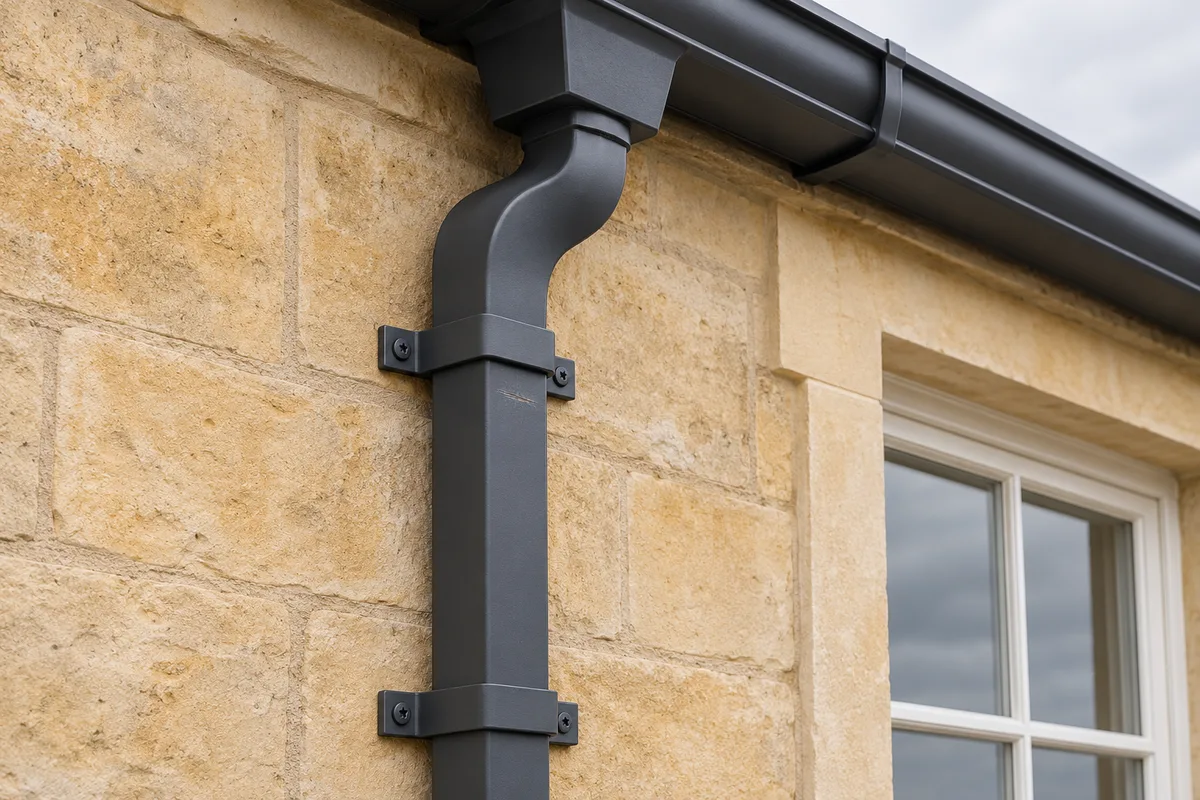 03 · FOLLOW THE WHOLE RAINWATER ROUTECheck the outlet, bends, pipe sockets and wall clips together, then confirm the gully or final discharge point can take the flow.AI-generated illustration · not customer work
A practical maintenance record
For homes, rental properties and business premises, keep one short record for each elevation:
- manufacturer or profile, if known;
- finish colour and any previous touch-up work;
- joint, outlet and bracket positions;
- date debris was cleared and surfaces washed;
- leaks or overflow seen during rain;
- coating damage, staining or suspect fixings; and
- photographs before and after maintenance.
This avoids guesswork when a matching part or safe access method is needed later. It is especially useful where several roof levels, box profiles or concealed outlets look similar from below.
When to arrange a professional inspection
Arrange a closer check if there is repeated leakage, standing water, a joint that has opened, a gutter pulling away, a loose downpipe, damaged coating to bare metal or water entering the building. Keep people clear of the area beneath any visibly loose component.
The Health and Safety Executive advises doing as much work as possible from the ground. It also warns against resting a ladder on weak upper surfaces and says ladders should only be used where risk assessment shows they are suitable. Aluminium gutter maintenance at height may need a gutter vacuum, inspection camera, tower or other planned access rather than a domestic ladder.
Related guides cover cast-iron gutters on older homes, how to assess leaking uPVC gutter joints, and what to check around loose downpipe clips and wall fixings.
The practical rule
Identify the aluminium system before choosing a cleaner, sealant, fixing or touch-up paint. Clear the water route, inspect the joint and its support together, and protect the coating rather than treating every leak as a quick sealant job.
Sources and further guidance
- Marley Alutec: product maintenance, coatings and safety
- Alumasc Water Management Solutions: rainwater technical guidance
- Health and Safety Executive: working at height safely
Share this guide
Know someone responsible for aluminium gutters or downpipes? Share this practical maintenance checklist.
Share on FacebookShare on WhatsApp