
 01 · RECORD THE ORIGINAL DETAILSPhotograph the gutter profile, hopper, joints, brackets and downpipe route before cleaning or repair work is planned.AI-generated illustration · not a customer property or job
Traditional rainwater goods need a careful approach
Older Bath and Bristol properties may have cast-iron gutters, decorative hoppers and round downpipes that form part of the building’s character. Their job is familiar—collect roof water and carry it away—but their weight, jointing, fixings and painted finish differ from a modern plastic system.
Start by recording what is actually present. Cast aluminium and other materials can imitate historic profiles, so photographs alone may not prove the material. Note the shape of the gutter, the number and position of joints, any decorative hopper heads, the brackets or fascia fixings and where the downpipe discharges.
Check the whole route from ground level
In good daylight, look for:
- vegetation or debris visible at outlets and hopper heads;
- flaking paint, exposed metal or rust staining;
- damp marks beneath gutter joints or behind downpipes;
- cracks, open seams or displaced sections;
- loose-looking brackets, clips or fixings;
- gutter runs that appear to sag or fall away from the outlet;
- water missing the hopper or downpipe shoe;
- blocked or overflowing ground gullies.
Use a phone zoom from firm ground rather than climbing for a close-up. The Health and Safety Executive’s work-at-height guidance recommends doing as much work as possible from the ground.
Cleaning should not become accidental repair work
Routine clearing means removing loose debris from the gutter, outlet and accessible hopper so water can follow the intended route. It should not involve levering against old sections, forcing a tool through a fragile joint or treating a visible crack as though it were only a blockage.
If a joint, bracket or outlet looks doubtful, flag it before cleaning begins. The visit may need a separate repair assessment or a different access plan. A clean gutter can still leak if a joint has failed, and a sealed joint will not solve a blocked downpipe or gully below.
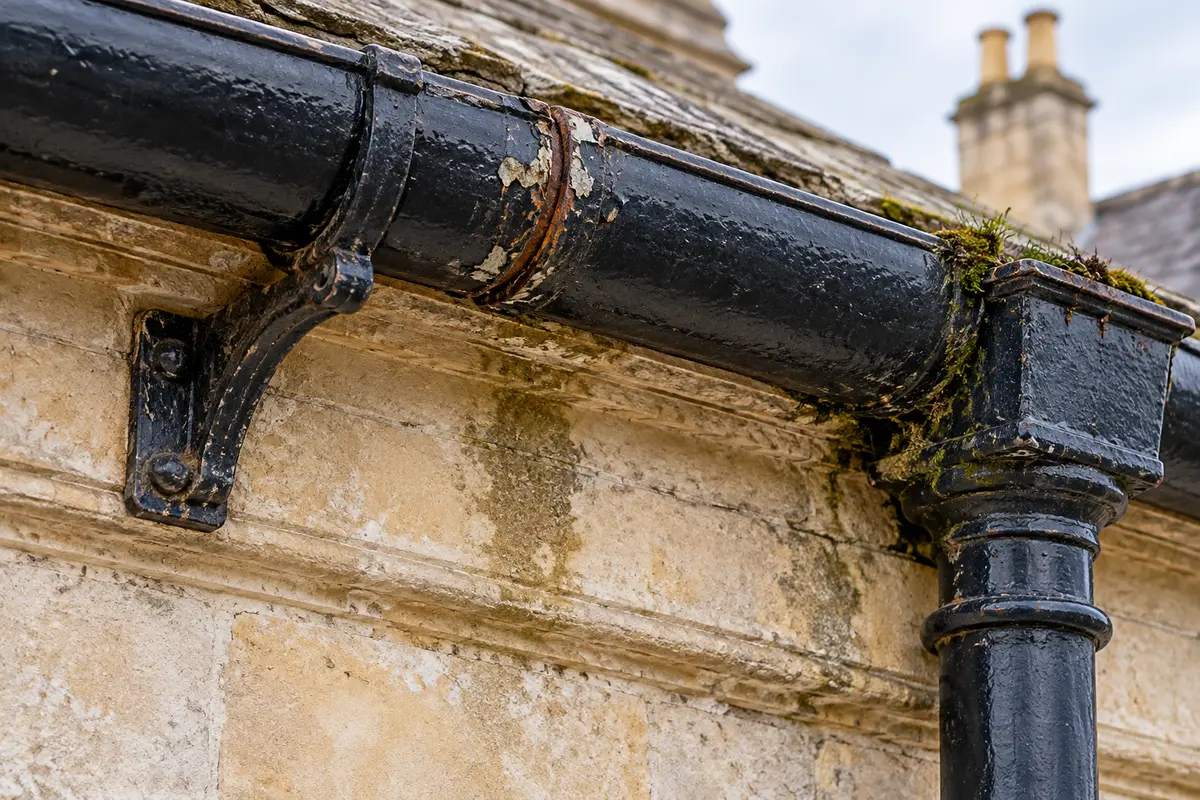 02 · SEPARATE BLOCKAGES FROM DEFECTSPaint loss, rust staining, movement and damp below a joint should be recorded for repair—not hidden by a routine clean.AI-generated illustration · not a customer property or job
Pay close attention to joints and painted surfaces
Cast-iron systems are assembled from separate components, creating more visible joints than long modern runs. Water marks below one joint can point to local leakage, while several overflowing points may suggest restricted outlets, downpipes or insufficient capacity.
Paint protects the metal, so peeling coatings and exposed areas deserve attention even before a hole appears. Redecoration is a separate maintenance task requiring appropriate preparation and compatible products. Do not paint over active corrosion, trapped debris or a leaking joint simply to make the system look finished.
Hoppers can hide more than the gutter
A hopper may receive water from several sources, including a gutter outlet, roof channel or another pipe. Photograph everything entering it. Leaves, moss and fragments can lodge at the base or at the top of the downpipe, where the blockage may not be obvious from below.
Ask whether the agreed work includes accessible hopper clearance and a flow check. If a concealed or internal section is involved, that may need a specialist inspection rather than a standard external clean.
Do not overlook the shoe, gully and drainage below
At ground level, confirm whether the downpipe ends over an open gully, enters a sealed connection or discharges elsewhere. The shoe should direct water into the receiving point rather than onto the wall or paving.
Historic England’s rainwater-system guidance says rainwater goods, gullies and below-ground drainage should all be considered as parts of the same system. A clear downpipe cannot compensate for a gully or drain that is backing up.
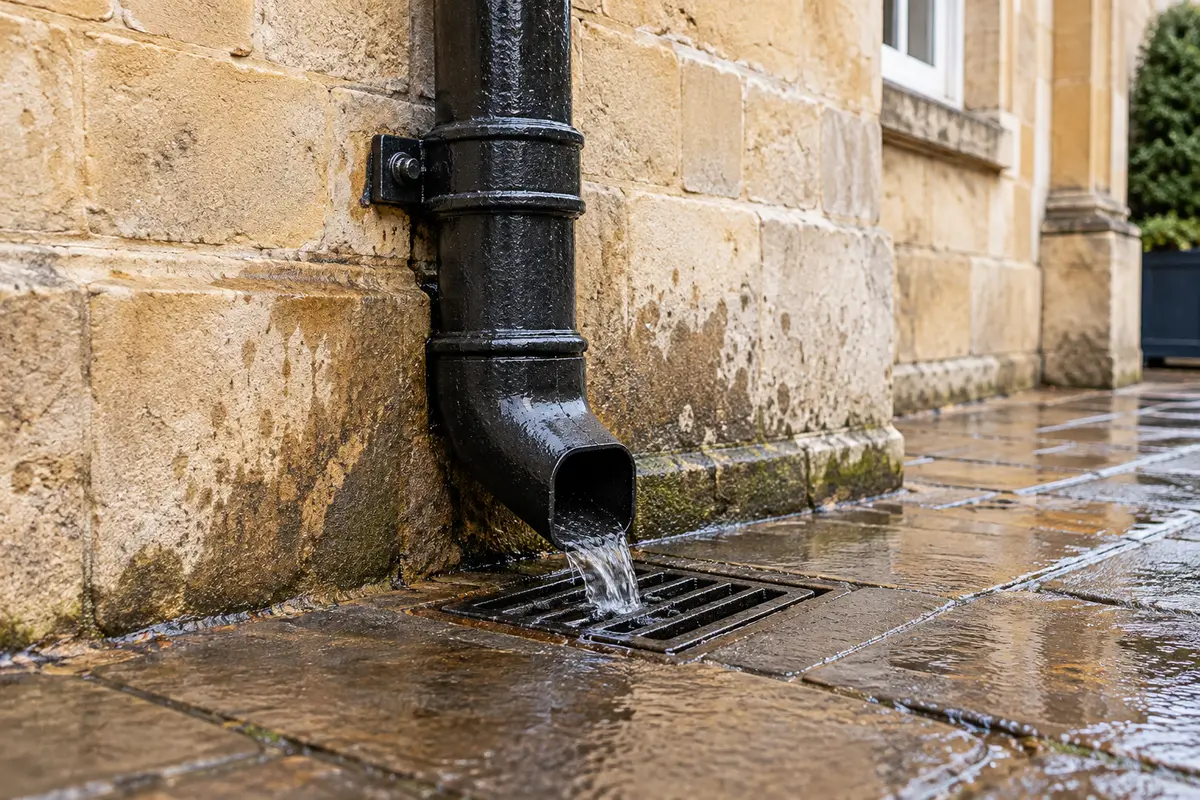 03 · FOLLOW WATER TO GROUND LEVELCheck that the shoe aligns with a clear gully and note staining, splashing or water ponding beside the wall.AI-generated illustration · not a customer property or job
Historic character may affect repair decisions
Traditional gutters, downpipes and decorative hoppers can contribute to the significance and appearance of an older property. Historic England advises that historically significant rainwater goods should be understood before upgrades or alterations are chosen.
If the building is listed, or the work would change important historic fabric or appearance, obtain appropriate conservation and planning advice before replacing sections or altering the system. Bath and North East Somerset Council notes that even small alterations to listed buildings or properties in conservation areas may require permission. Routine clearance is not the same as replacement or alteration.
Build a useful maintenance record
Keep dated photographs of every elevation, joint, hopper and outlet. Add after-clean images, note sections that could not be accessed and record any recommended repairs or redecoration. Repeat photographs taken from the same safe viewpoint make gradual movement, staining or paint loss easier to compare.
Useful distinction: clearing restores the water path; repair addresses failed joints, cracks or fixings; redecoration protects the metal; alteration changes the system and may need separate heritage advice.
What to send with your quote request
- postcode, property type, age if known and number of storeys;
- whether the building is listed or within a conservation area, if known;
- wide photographs of each elevation and roof edge;
- close photographs of hopper heads, joints, brackets and outlets;
- the full downpipe route, shoe and ground gully;
- details of rust, flaking paint, damp marks, cracks or movement;
- access constraints such as narrow areas, conservatories or pavement frontage;
- whether you need clearing, a flow check, repair advice or a separate quotation.
For related guidance, see our autumn gutter maintenance checklist, how to distinguish an overflow from a leaking joint and service areas across Bath, Bristol and surrounding towns.
Guidance checked on 13 October 2026: Historic England—inspection, maintenance and repair of rainwater systems; Historic England—upgrades or alterations to rainwater goods; Bath and North East Somerset Council—planning permission; HSE work-at-height guidance.
Share this guide
Know someone caring for an older property with cast-iron rainwater goods? Share this practical guide.
Share on FacebookShare on WhatsApp