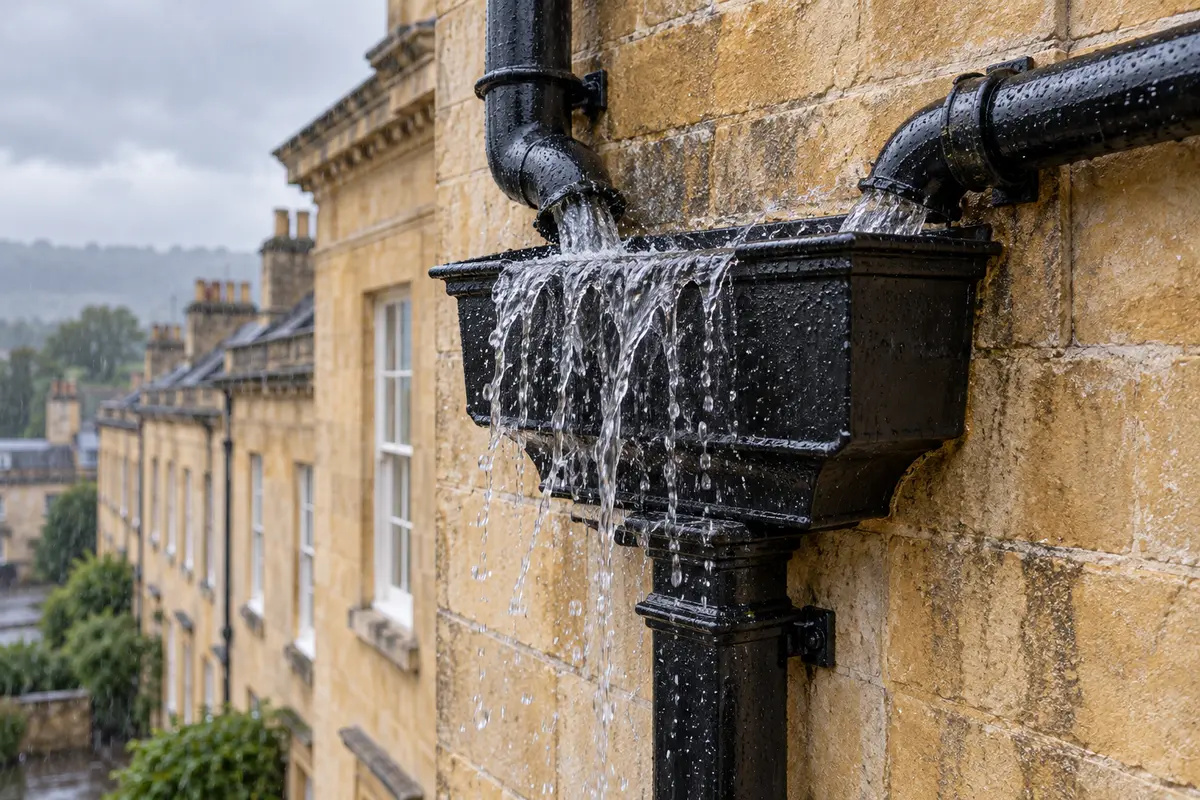
 01 · WATCH THE HOPPER DURING RAINWater over the rim is a useful clue, but the restriction may be in the hopper throat, the downpipe below or the ground drainage beyond it.AI-generated illustration · not a customer property or job
A hopper head is the open box or funnel fixed above a downpipe. It may receive water from one gutter, several roof outlets, a valley or a flat roof. Because several routes can meet in one small opening, an overflowing hopper can reveal a blockage quickly—but it does not identify the cause on its own.
In Bath, Bristol and surrounding towns, hoppers are common on older terraces and converted buildings. Some are decorative cast iron; others are later replacements. The safest way to diagnose a problem is to follow the complete rainwater route rather than treating the visible spill as proof that the hopper itself is the only fault.
What a hopper head does
A hopper collects water from one or more higher-level pipes or outlets and directs it into the vertical downpipe. It also leaves the incoming flow visible, which helps with inspection. A correctly working hopper should accept that flow without repeatedly spilling over its rim.
Historic England recommends understanding and recording how the whole rainwater system functions. For a hopper, that means noting every feed entering it, the downpipe below and where that downpipe discharges at ground level.
Warning signs worth recording
- water spilling over the front or side of the hopper during rain;
- dark streaks, algae or damp staining directly below the rim;
- moss, leaves, twigs or plant growth visible inside;
- water lingering in the hopper after rainfall has eased;
- drips from a joint immediately below the hopper;
- a gurgling sound or water backing up when several roof feeds run together;
- cracks, corrosion, open joints or loose fixings around the hopper body.
Photographs taken safely from the ground during rain can be more useful than a dry-weather close-up because they show where the water first escapes. Do not stand beneath an overflowing fitting in strong wind or heavy rain.
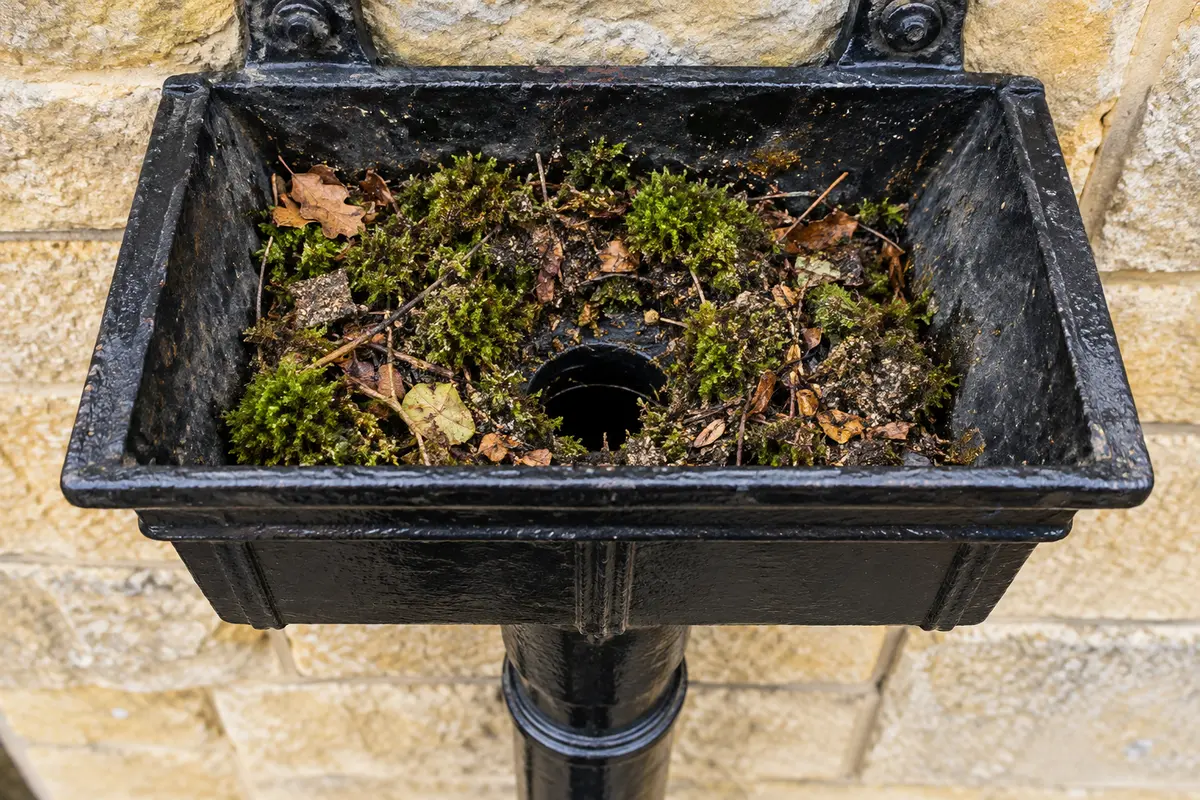 02 · THE THROAT IS A COMMON PINCH POINTLoose moss, leaf stems and silt can gather where the open hopper narrows into the downpipe.AI-generated illustration · not a customer property or job
Why the overflow location matters
If water enters the hopper and immediately rises over the rim, debris may be covering the outlet throat or the downpipe below may be restricted. If the hopper empties normally but the ground gully floods, the separate drainage route may need attention. A cracked hopper or failed joint can leak even when the pipe is clear.
Capacity matters too. A hopper receiving several roof areas may cope in ordinary rain but overflow in a short, intense downpour. That does not automatically justify a larger fitting: altered roof layouts, blocked feeds, poor falls and the below-ground route should be understood first. Changes to traditional rainwater goods on a listed or historic building may also need conservation advice.
What a sensible cleaning and flow check includes
- Record the feeds. Identify which gutters, outlets, valleys or flat roofs discharge into the hopper.
- Remove loose debris. Clear accessible moss, leaves and silt from the hopper without damaging the finish or forcing material deeper into the pipe.
- Check the throat and downpipe. Confirm that the outlet below the hopper is open and that the agreed section of downpipe is clear.
- Test the route. Introduce a controlled amount of water and observe the hopper, joints, downpipe shoe and gully.
- Separate cleaning from repairs. Record any corrosion, cracks, loose brackets or open joints that need a different repair.
SPAB advises regular clearing of rainwater fittings, especially after autumn leaf fall, together with checks for defects. It also notes that overflow pipes above hopper heads can sometimes provide a useful warning route where they are visually acceptable; any alteration should be properly designed for the building.
 03 · CHECK THE COMPLETE ROUTEA successful flow check follows water from every feed, through the hopper and downpipe, to the final discharge point.AI-generated illustration · not a customer property or job
When cleaning is not enough
Clearing debris will not repair a split hopper, a corroded back, a failed seal or a loose fixing. It will not resolve a collapsed drain below ground either. If the hopper empties but the gully continues to back up, that may be a separate drainage job. If water appears behind the hopper or the stonework remains wet, the fitting and adjacent building fabric may need closer inspection.
Traditional cast-iron and lead rainwater goods can be important parts of an older building. Historic England advises maintenance and repair before unnecessary replacement, with changes based on a clear understanding of the existing system.
Keep the inspection at ground level
Use a zoomed photograph or binoculars to inspect the hopper from a safe position. HSE guidance says work at height should be avoided where reasonably practicable and that as much work as possible should be done from the ground. Do not climb onto a roof, lean from a window or rest a ladder against plastic guttering or another weak surface.
What to send for a clearer quote
- a wide photograph showing the hopper, all incoming feeds and the downpipe below;
- a close view from ground level if debris or a crack is visible;
- a short video during rainfall, taken from a sheltered safe position;
- where the downpipe finishes—open shoe, ground gully, water butt or direct connection;
- whether the problem occurs in ordinary rain or only very heavy rain;
- the building height and any access constraints such as conservatories, extensions or neighbouring land;
- whether the property is listed or in a conservation area, if known.
For related advice, see our guide to cast-iron gutters on older homes, blocked downpipe or gully checklist and service areas across Bath, Bristol and surrounding towns.
Guidance checked on 19 October 2026: Historic England—inspection, maintenance and repair of rainwater systems; SPAB—rainwater fittings; HSE work-at-height guidance.
Share this guide
Know someone with an overflowing hopper head or unexplained staining below one? Share this guide to the warning signs and checks.
Share on FacebookShare on WhatsApp