
 01 · LET THE PROPERTY SET THE TIMINGNearby trees, roof shape and outlet position can make one gutter run refill long before another on the same building.AI-generated illustration · not a customer property or job
“Once a year” is a useful starting point, but it is not a complete maintenance plan. A clear gutter in early October may collect more material before the main leaf fall ends, while an open roofline with few nearby trees may remain clear much longer. The sensible approach is to inspect the actual property and adjust the schedule to what you find.
Historic England recommends inspecting and clearing rainwater goods after heavy leaf fall, at least every autumn and preferably more often where necessary. Its technical guidance also says the frequency should be reviewed so the maintenance schedule continues to suit the building. That is a better rule than choosing the same date for every house, shop or managed block.
Why a single calendar date can miss the problem
Deciduous trees lose their leaves seasonally, usually during autumn, but they do not all finish at the same moment. Weather, shelter and the mix of trees around a property can spread the fall over several weeks. Material may also reach a gutter from farther away than the branch directly above it, particularly on an exposed street or around a courtyard where wind swirls.
The roof then sorts that material. Slates or tiles direct it to the eaves; valleys concentrate it into a shorter section; dormers and extensions create sheltered corners; and the water carries smaller fragments towards outlets. A gutter can therefore look mostly clear while the outlet mouth or one short return is already restricted.
This is why the answer is not simply “clean after all the leaves have fallen”. Waiting too long can leave an outlet restricted during autumn rain. Cleaning too early without a later check can leave the same run full again before winter.
Map the higher-risk gutter runs
Stand at ground level and look at each elevation separately. Note the tree-facing side, overhanging branches, roof valleys, internal corners, hopper heads and any short run with only one outlet. Include rear extensions, conservatories, garages and lower roofs; they may receive material from a much larger roof or from a tree that is hidden from the street.
Useful questions are:
- Which gutter runs sit below or downwind of the nearest canopy?
- Where do roof valleys or steep slopes concentrate debris and water?
- Does one outlet serve a long run or several roof sections?
- Are there hopper heads, guards or narrow openings where fragments can gather?
- Can every downpipe and ground gully be identified?
- Which sections cannot be seen properly from a safe position?
Do not assume the front and rear need the same interval. One elevation may be open to the sky while another sits below mature trees or in a sheltered courtyard. Treat them as separate maintenance zones and record what each one needs.
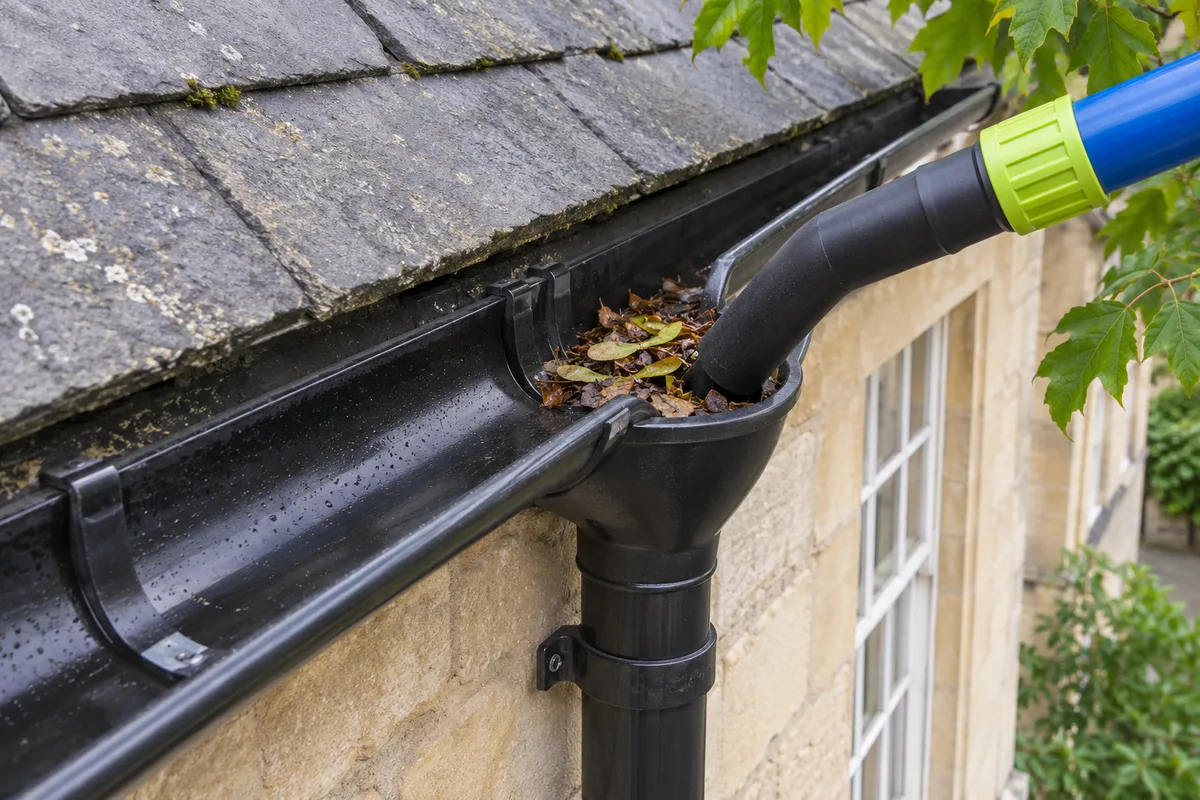 02 · CHECK THE OUTLET, NOT JUST THE CHANNELA modest pocket of fragments at the outlet can matter more than a few loose leaves spread along an otherwise clear run.AI-generated illustration · not customer work
When one autumn clean may be enough
One well-timed autumn clean may be reasonable where the roofline has limited tree exposure, every outlet is clear, the channels drain properly and a later ground-level check shows little new material. The decision should be based on evidence from that property, not on the fact that a neighbour uses the same interval.
A useful single visit should cover more than scooping visible leaves. It should include the complete gutter runs, outlet mouths, hopper heads, tops of downpipes and accessible ground gullies. It should also record standing water, loose brackets, leaking joints or sections that could not be inspected. Clearing does not repair those defects, but it makes them easier to identify.
After the visit, look again from the ground once the main leaf fall has passed or after a period of heavy rain. If water is moving cleanly to the outlets, there is no fresh build-up and no spill pattern on the fascia or wall, the evidence may support retaining one autumn clean in the plan.
Signs that a second seasonal check is justified
A second check is not an automatic upsell. It is justified when the first clean is followed by further heavy leaf fall, when one gutter run visibly refills, or when rain reveals that an outlet or gully is becoming restricted again.
Common triggers include:
- a first clean carried out before the main nearby trees were bare;
- fresh material visible in the tree-facing gutter or hopper;
- water rising near an outlet during ordinary rain;
- a damp streak below a joint that was dry after the first visit;
- leaves covering a gully grille beneath the downpipe;
- a roof valley repeatedly delivering debris to the same short section; or
- a managed or empty property where a blockage could go unnoticed for weeks.
The second visit may be a targeted inspection of the higher-risk runs rather than a repeat of every task. The important point is to agree the scope clearly: which elevations will be checked, which outlets will be confirmed clear and whether photographs will be supplied.
Do gutter guards remove the need to check?
No guard or grille makes a rainwater system maintenance-free. A product may reduce the size or amount of material entering the channel, but leaves, seed pods and silt can sit on top, collect at an edge or gather where the guard meets an outlet. The suitability also depends on the roof, gutter profile, nearby trees and how the product can be accessed for cleaning.
If guards are fitted, include them in the inspection. Look for lifted sections, trapped material, water bypassing the gutter and debris accumulated at the outlet. Do not add a guard over an existing blockage or use it to hide a gutter whose fall, supports or capacity already need attention.
 03 · RECORD DIFFERENT MAINTENANCE ZONESThe sheltered tree-facing wing and the open roofline may need different checks even though they belong to the same property.AI-generated architectural illustration · not a customer property
Use photographs to improve next year’s timing
A short record turns guesswork into a property-specific plan. Photograph each gutter run before and after cleaning, with a wide view that identifies the elevation and a closer view of the outlet. Record the date, whether the main nearby trees still held leaves, the weather and any section that could not be checked.
If a second inspection finds very little new material, next year’s first visit might be moved later. If one outlet is restricted again within weeks, that run may need an earlier clean followed by a targeted check. Keep the record for landlords, facilities managers and businesses so the schedule is not lost when the responsible person changes.
The record should separate debris from defects. Repeated pooling may indicate a sag or poor fall. Water behind the gutter may relate to the roof edge. A leaking union may need a repair even when the channel is clear. Changing the cleaning date will not correct those problems.
Plan the work safely
High gutters are not a reason to lean from a window, walk on a fragile roof or rest a ladder against plastic guttering. The Health and Safety Executive says work at height should be properly planned, carried out by competent people with suitable equipment, and completed from the ground where reasonably practicable.
From the ground, homeowners and managers can note visible debris, staining, overflow and the position of nearby trees. Binoculars or a camera zoom can help with observation. A professional clean can then use an appropriate gutter-vacuum, inspection camera or access method for the building. Hidden box gutters and areas that cannot be assessed from below may need planned high-level access.
A simple decision sequence
- Map the roofline. Separate open elevations from tree-facing and sheltered runs.
- Note the stage of leaf fall. Record whether nearby deciduous trees still hold substantial foliage.
- Clear the complete route. Include outlets, hoppers, downpipe tops and accessible gullies.
- Photograph the result. Use the same views for the later comparison.
- Recheck after heavy leaf fall or heavy rain. Look for fresh build-up, pooling or overflow.
- Target the second visit. Repeat work where the evidence shows it is needed.
- Review the schedule. Keep the findings so next autumn starts with a better plan.
Related guides cover the wider autumn gutter maintenance checklist, what gutter guards can and cannot do, how roof moss reaches gutters, and the photographs that make a useful before-and-after record.
The practical rule
Plan the first clean around the condition of the property, then use a post-leaf-fall or post-rain check to decide whether a second targeted visit is justified. The evidence in the outlets matters more than the date on the calendar.
Sources and further guidance
- Historic England: maintenance checklist
- Historic England: inspection, maintenance and repair of rainwater systems
- Royal Horticultural Society: deciduous trees
- Health and Safety Executive: working at height safely
Share this guide
Know someone whose gutters sit close to mature trees? Share this practical guide to timing autumn checks.
Share on FacebookShare on WhatsApp