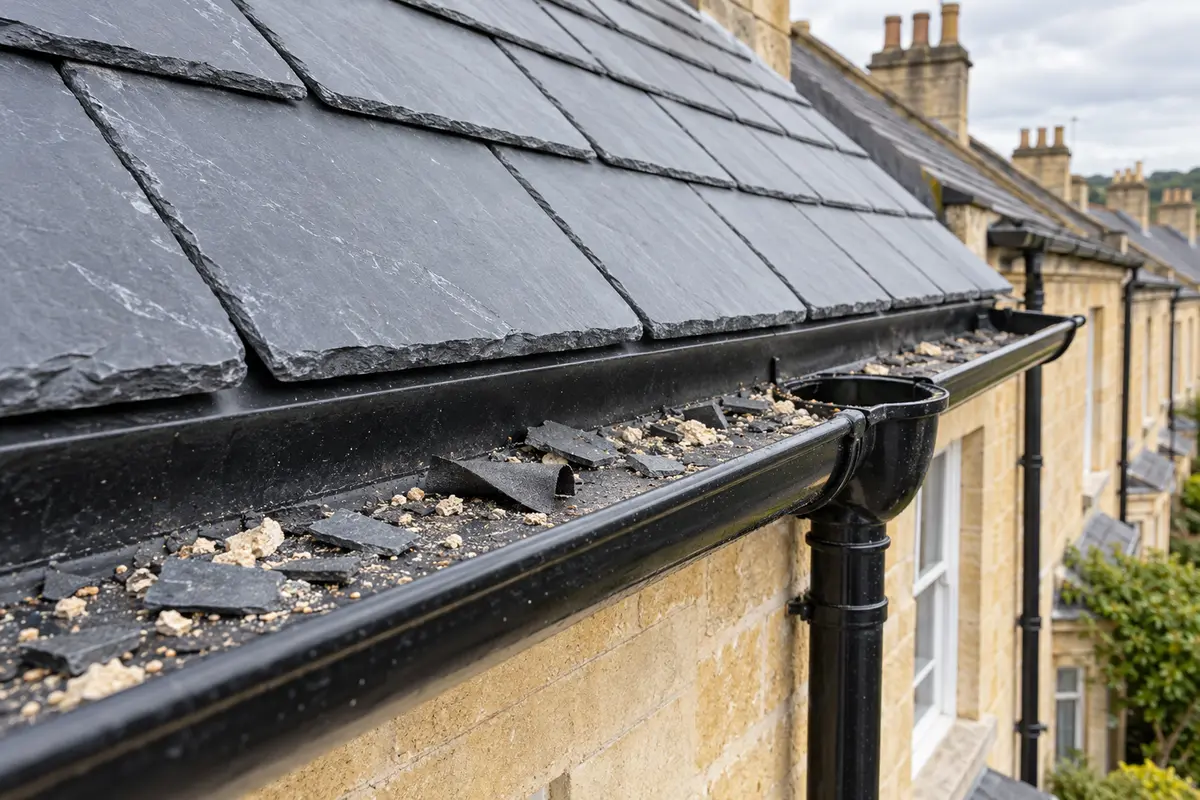
 01 · CHECK BEFORE THE JOB IS CLOSEDSlate chips, mortar crumbs, roofing grit and small offcuts can collect below the work even when the roof itself looks complete.AI-generated illustration · not a customer property or job
Yes. Gutters, outlets and ground-level drainage should be checked after roof repairs, repointing, rendering, window replacement or other work carried out above them. The aim is not to blame a particular trade; it is to confirm that loose material has not been left in the rainwater route and that nothing has been damaged or moved.
The Society for the Protection of Ancient Buildings notes that gutters, downpipes and gullies can become blocked by accumulated debris, including broken tiles. A short post-work check is especially useful before scaffolding is removed, while safe professional access may still be available.
What can reach a gutter during building work?
- small slate, tile or ridge fragments;
- mortar crumbs and pointing dust;
- roofing grit and drill dust;
- short membrane, felt or sealant offcuts;
- sawdust and small timber splinters;
- packaging pieces, cable ties or protective film;
- old moss and silt disturbed while roof coverings are handled.
One small fragment may wash through without a problem, but mixed debris can gather at an outlet, a downpipe bend or a ground gully. Fine material can also settle into existing silt and make an older restriction worse.
Arrange the check at the right point
Ask how gutters will be protected and cleared before work starts. For roofing work, the best time for the final check is normally after the roof work is complete but before safe access equipment is removed. That lets the contractor or gutter specialist inspect areas which may be difficult to see from the ground.
Homeowners should not climb scaffolding or access a roof themselves. Access arrangements belong with the contractor controlling the work. HSE guidance says work at height should be avoided where reasonably practicable and properly planned, supervised and carried out by competent people where it cannot be avoided.
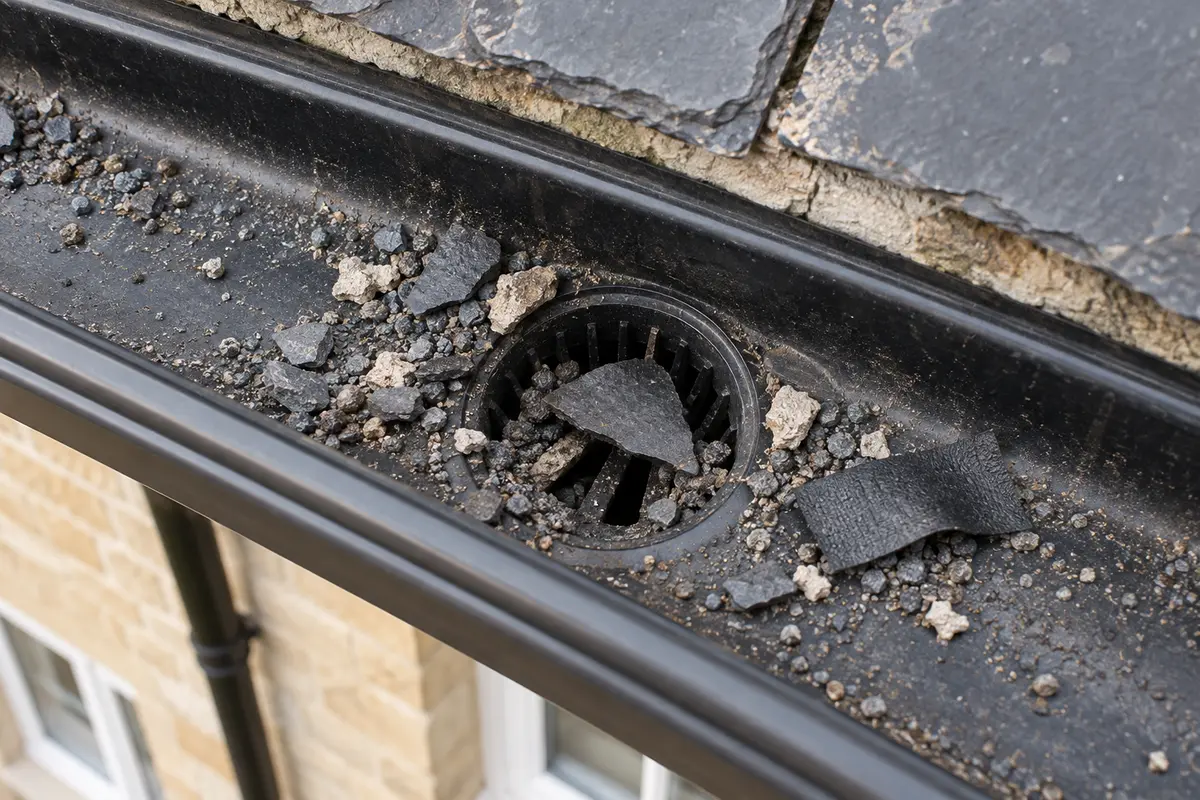 02 · CLEAR SOLIDS BEFORE A FLOW TESTDo not wash slate, mortar or offcuts into the downpipe. Lift out loose material first, then test the cleaned water route.AI-generated illustration · not a customer property or job
Start with the gutter and outlet
The check should cover the full gutter run below the work, not just the area where debris is easiest to see. Loose solids should be removed by hand or suitable vacuum equipment before water is introduced. Washing construction debris towards the outlet can move the problem into a downpipe bend where it is harder to reach.
Pay particular attention to running outlets, stop ends, angles and union joints. A small slate chip can bridge across an outlet guard; grit can settle around a seal; and a displaced gutter section may no longer fall correctly towards the outlet.
Look for disturbance as well as debris
Roof and building work can require ladders, scaffold, waste chutes or materials near the eaves. A post-work inspection should therefore record the condition of the gutter as well as its contents:
- brackets remain fixed and evenly supporting the run;
- joints are seated and have not opened;
- stop ends and angles are secure;
- the gutter has not twisted, bowed or pulled away from the fascia;
- downpipe clips and swan-neck bends remain secure;
- new render, paint or sealant has not obstructed an outlet or air gap;
- the fascia and soffit are free from fresh impact marks or staining.
Cleaning removes loose material. It does not repair cracked fittings, failed seals, loose brackets or a damaged fascia. Keep those items separate in the handover record and quote.
Follow the full route to ground level
Once solids have been removed, a controlled flow check should follow water from the gutter to the outlet, through the downpipe and to its final discharge point. Check the downpipe shoe, open gully, water-butt diverter or direct connection that receives the flow.
If the gutter and downpipe run freely but the ground gully backs up, the remaining problem may be within the separate drainage system. If water leaks from a joint before reaching the ground, the fitting may need repair rather than further clearing.
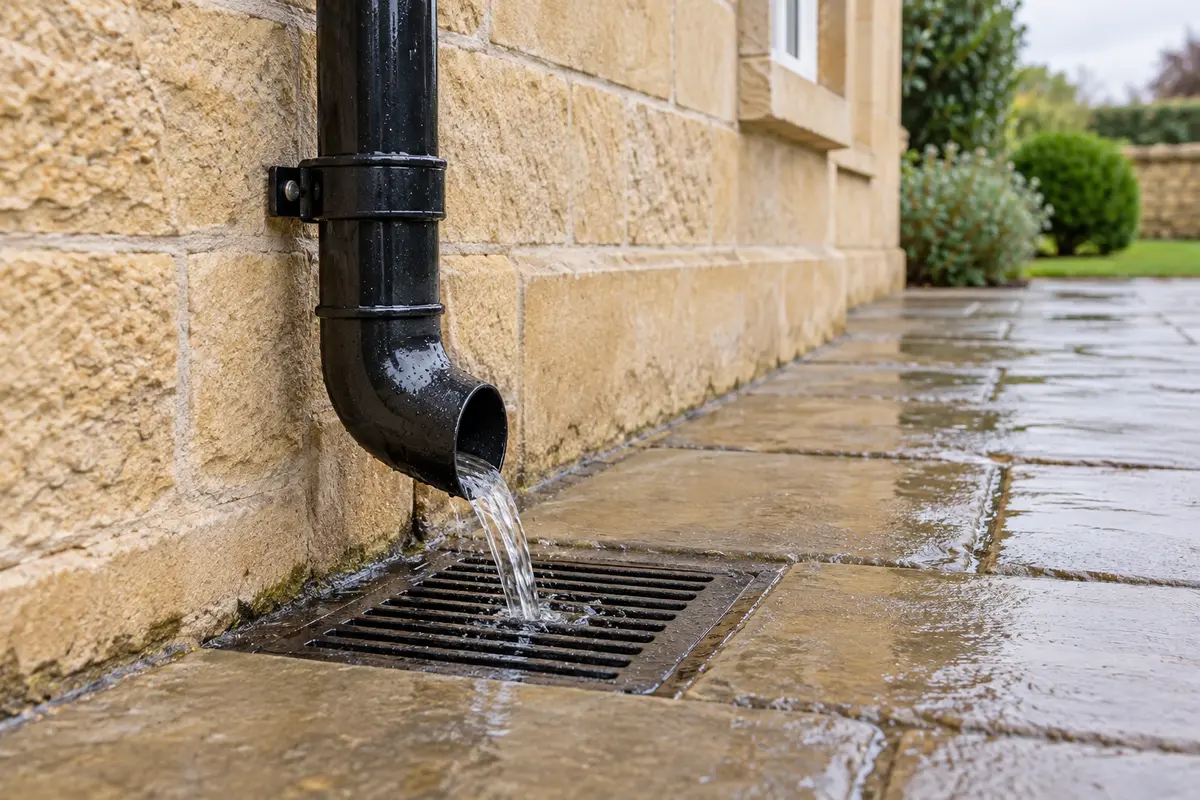 03 · FINISH AT THE DISCHARGE POINTA useful handover check confirms that water travels beyond the gutter and reaches a clear gully or other intended outlet.AI-generated illustration · not a customer property or job
Valley, box and parapet gutters need extra care
Some roof work takes place beside concealed valley, box or parapet gutters. Historic England advises that ground-level visual inspection may not be enough for these areas and that closer high-level assessment can be needed. They should be included explicitly in the agreed work and inspected by someone with appropriate safe access.
On older or listed properties, traditional leadwork, cast iron and stone details may be significant. Record the existing materials and obtain suitable conservation advice before altering the drainage arrangement.
A simple handover record
For homeowners, landlords and facilities managers, ask for a short photographic record that shows:
- the gutter runs directly below the completed work;
- each outlet after loose debris has been removed;
- the condition of joints, brackets, stop ends and angles;
- the downpipe route and ground-level discharge point;
- any defects found but not included in the original contract;
- the result of the controlled flow check.
For larger or commercial properties, label the roof elevations and downpipes so the photographs can be matched to the correct area later. Historic England recommends understanding and recording how the complete rainwater system functions, which makes future maintenance much easier.
When to arrange a separate gutter clean
A separate clean is sensible when the building work did not include rainwater goods, when debris is already present beyond the immediate work area, or when the downpipe route cannot be confirmed during the original job. It is also useful if the work has disturbed an older build-up of moss or silt.
For related advice, see our roof moss and gutter guide, blocked downpipe or gully checklist and service areas across Bath, Bristol and surrounding towns.
Guidance checked on 20 October 2026: SPAB—rainwater fittings; Historic England—inspection, maintenance and repair of rainwater systems; HSE—working at height safely.
Share this guide
Know someone having roof repairs or building work carried out? Share this post-work gutter checklist before the access equipment comes down.
Share on FacebookShare on WhatsApp